Pangolin Claws: Anatomy, Digging Power, and Evolutionary Adaptations
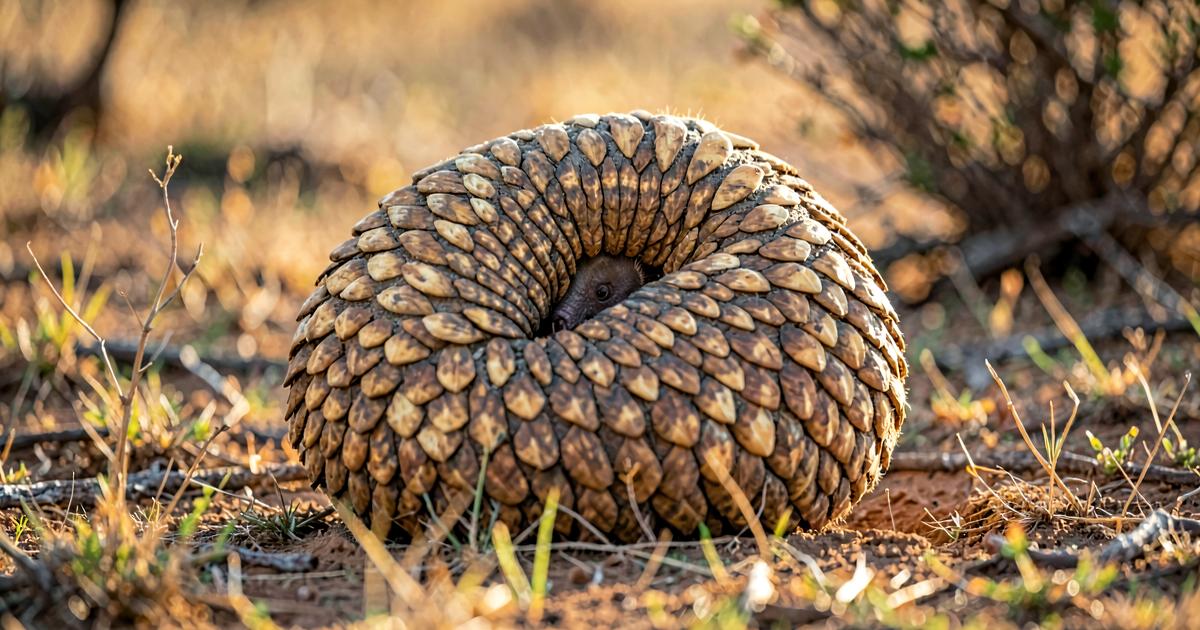
When people think of pangolins, they typically picture the overlapping keratinous scales that clothe the animal's body and tail in a living armour. But pangolins possess a second anatomical feature equally remarkable in its engineering: their claws. Powerful, curved, and built for sustained excavation, pangolin claws are among the most effective digging tools in the mammalian world, capable of penetrating the hardest laterite soils and dismantling termite mounds that resist the tools of fieldworkers. Understanding pangolin claw anatomy illuminates not just the biology of these extraordinary animals but also the specific care requirements that make them so difficult to maintain in captivity.
Basic Anatomy: Five Digits, Unequal Claws
Pangolins are pentadactyl — they possess five digits on each limb — though the functional emphasis on different digits varies significantly between the forefeet and hindfeet, and between terrestrial and arboreal species.
Forefeet: The Primary Digging Instruments
The most structurally significant claws are those of the forefeet, particularly the third digit, which typically bears the largest and most robust claw on the animal's body. In the giant ground pangolin (Smutsia gigantea), the largest of all pangolin species, the claw on the third digit of the forefoot can reach lengths in excess of ten centimetres, giving the animal an overall forefoot extension that is visually dramatic and functionally critical. The second and fourth digits bear somewhat shorter but still substantial claws, while the first and fifth digits have reduced claws that play a secondary role in excavation and locomotion.
The cross-sectional shape of pangolin forefeet claws is laterally compressed and strongly curved, forming a wide arc from the base to the tip. This shape is not arbitrary: the curvature maximises the mechanical advantage when the claw is used as a hook, engaging the substrate at an angle that allows muscular force to be converted efficiently into forward and downward excavation motion. The compression reduces the surface area presented to the soil during penetration, concentrating force at the tip and facilitating entry into hard substrates that a broader, flatter claw would fail to penetrate.
Hindfeet: Balance and Secondary Grip
The claws of the hindfeet are structurally similar to those of the forefeet but are uniformly smaller and shorter. In terrestrial species, hindfeet claws provide traction and stability during locomotion and assist in anchoring the animal's rear quarters during bouts of intense digging. In arboreal species such as the white-bellied pangolin (Phataginus tricuspis) and the black-bellied pangolin (Phataginus tetradactyla), the hindfeet claws also play a grip role when the animal is moving through canopy substrates, working in concert with the prehensile tail to maintain balance in a three-dimensional environment.
Material Composition: Keratin Architecture
Like the scales that cover the body and the tongue's keratinised tip, pangolin claws are composed primarily of alpha-keratin, the same fibrous structural protein that forms the basis of human fingernails, hair, and the horn of rhinoceroses. The keratin in pangolin claws is organised in tightly bonded fibres oriented along the claw's long axis, providing exceptional tensile strength that resists cracking and fracture under the compressive and shear forces generated during excavation.
The claw grows continuously from a germinal matrix at the base, in a manner analogous to the growth of mammalian nails. In wild pangolins, natural wear from digging, locomotion, and contact with abrasive substrates keeps claw length in balance with growth rate, maintaining optimal claw geometry for the animal's ecological needs. This continuous growth is an adaptive feature that compensates for the inevitable abrasion of sustained digging activity: an animal that spent its working life excavating would rapidly wear non-growing claws to uselessness.
The outer surface of the claw is relatively smooth and slightly lustrous, while the inner concave surface may be rougher. The claw tip is sharply pointed in juveniles but may develop a somewhat blunter profile in older animals as repeated use rounds the apex, though the curvature and compression of the claw body ensure that even slightly worn claws retain strong excavation performance.
The Knuckle-Walking Gait: Protecting the Claws
One of the most distinctive features of pangolin locomotion is the manner in which ground-dwelling species walk on their forefeet: not on the flat foot surface as most quadrupeds do, but on the outer knuckles of the closed fist, with the large forefoot claws folded inward against the palm and held off the ground. This gait pattern, sometimes described as semiplantigrade or knuckle-walking, is a direct adaptation to protect the claws from unnecessary wear during routine locomotion.
The parallel with gorilla locomotion is often noted but is convergent rather than phylogenetically related: gorillas are large-bodied apes that evolved knuckle-walking to distribute body weight while retaining dextrous hands, while pangolins evolved a functionally similar gait to protect specialised digging claws that would be damaged by constant ground contact. The biomechanical solution is similar; the evolutionary drivers are entirely different.
When a pangolin begins to excavate, it transitions from this protective folded-claw gait to an active digging posture in which the forefeet are extended and the claws are deployed against the substrate. High-speed video studies of pangolin digging behaviour have documented rapid, alternating hook-and-pull strokes in which the claws engage the soil surface, the foreleg flexors contract to drag material backward, and the hindquarters remain braced against the ground to provide a stable anchor. In hard substrate, a pangolin may spend several minutes working a single entry point before breaking through to the softer interior of a termite mound or ant colony.
Digging Performance Across Species
The digging capability of different pangolin species reflects their ecological contexts and body sizes.
Giant Ground Pangolin: Maximum Excavation Power
The giant ground pangolin is the benchmark for pangolin digging performance. Its large body mass — up to 33 kilograms in large adults — provides the muscular anchoring needed to generate the sustained excavation forces required to break into the large, hardened mounds of savanna termite species. Field observations have recorded giant ground pangolins excavating burrows more than two metres in depth and three metres in lateral extent, creating shelter structures that are subsequently used by a range of other species including warthogs, aardvarks, and small carnivores.
The hardness of the soils in which giant ground pangolins routinely excavate — laterite-rich substrates in savanna and forest-savanna transition zones can have hardness values comparable to weak concrete — places enormous demands on claw structural integrity. The evolutionary refinement of the giant ground pangolin's claw morphology over millions of years represents one of the most effective solutions to the biological engineering problem of sustained penetration of hard mineral substrates.
Temminck's Ground Pangolin: Adapted for African Soils
The Temminck's ground pangolin (Smutsia temminckii), the only pangolin species found across the southern African savannas including South Africa, Zimbabwe, and Botswana, has proportionally large forefeet claws relative to body size. It commonly excavates termite mound colonies and constructs or modifies burrows for day-time refuge. Its digging behaviour has been the most extensively studied of any pangolin species due to its presence in southern African countries with active pangolin research communities.
Arboreal Species: Claws as Canopy Grips
In arboreal species, claw function extends beyond excavation to encompass canopy navigation. The white-bellied pangolin uses its claws to grip bark textures and horizontal branches while manoeuvring through forest understory, often descending to the ground to excavate ant or termite colonies and then returning to arboreal refuge. The balance between claw length sufficient for grip and claw length that would impede fine locomotion is different for arboreal species than for terrestrial ones, and this is reflected in the proportionally shorter forefeet claws of arboreal pangolins compared to their terrestrial relatives.
Captive Care and Claw Health
The continuous growth of pangolin claws and their dependence on natural abrasion for maintenance creates one of the most persistent challenges in pangolin captive care. In enclosures without adequate hard substrate — rough rock surfaces, compacted earth, concrete textured elements — pangolin claws grow without being worn down, eventually reaching lengths that alter the animal's gait, impede locomotion, and can cause secondary injury as overlong claws catch on surfaces or cause the foot to be held at an unnatural angle.
Veterinary literature on pangolin captive care documents claw overgrowth as a common finding in animals held in suboptimal enclosures, often associated with lameness, reduced activity, and behavioural abnormalities consistent with discomfort or pain. Remediation requires either physical trimming — a stressful procedure in a species already prone to stress-related mortality — or redesign of the enclosure to provide appropriate wear surfaces. Prevention through correct enclosure design is consistently recommended as the preferred approach.
Welfare standards developed by institutions with successful pangolin captive programmes emphasise the provision of hard substrate elements that replicate the range of soil and bark textures a pangolin would encounter in the wild. This has been integrated into the husbandry guidelines published by bodies including the African Pangolin Working Group and the IUCN SSC Pangolin Specialist Group.
Defensive Use of Claws
While pangolins are primarily passive defenders — relying on curling into a protected ball and on the protective armour of their scales — the claws are also available as a secondary defence and have been documented being used in this capacity. A pangolin that is grasped and cannot complete its defensive curl may slash with its forefeet, and the cutting edge of a fully deployed giant ground pangolin claw can inflict significant laceration injuries on an attacker. Predators that have not learned to handle pangolins cautiously, and inexperienced human handlers, can be injured by this response.
It is important to note, however, that this defensive claw use is a last resort rather than a primary behaviour. The pangolin's first response to threat is always to curl, relying on the near-impenetrability of its scaled armour to deter predators. Claw defence is characteristic of animals that have been cornered, restrained, or are already partially uncurled when threat materialises — not a behaviour that pangolins deploy proactively or at distance.
Evolutionary Context
The claw morphology of pangolins reflects the deep evolutionary history of the Pholidota — the order to which all pangolin species belong — which diverged from other placental mammals more than 80 million years ago and has since followed an independent evolutionary trajectory focused on the specialist myrmecophage (ant and termite feeder) ecological niche. The claw architecture observed in living pangolins is the product of this extraordinarily long period of ecological specialisation, refined across thousands of pangolin generations in response to the demands of excavating nests defended by large, aggressive insect colonies in hard tropical soils.
The parallel evolution of similar claw morphologies in distantly related ant and termite specialists — including aardvarks, anteaters, and echidnas — reflects the convergent power of the same ecological pressure to produce similar engineering solutions in mammalian lineages that have never shared a common ancestor in the age of placental mammals. In this sense, the pangolin's claw is not just an anatomical feature of one remarkable species but a case study in how natural selection solves mechanical engineering problems across evolutionary time.