Pangolin Conservation in Cameroon: Fighting the Trafficking Crisis in Central Africa
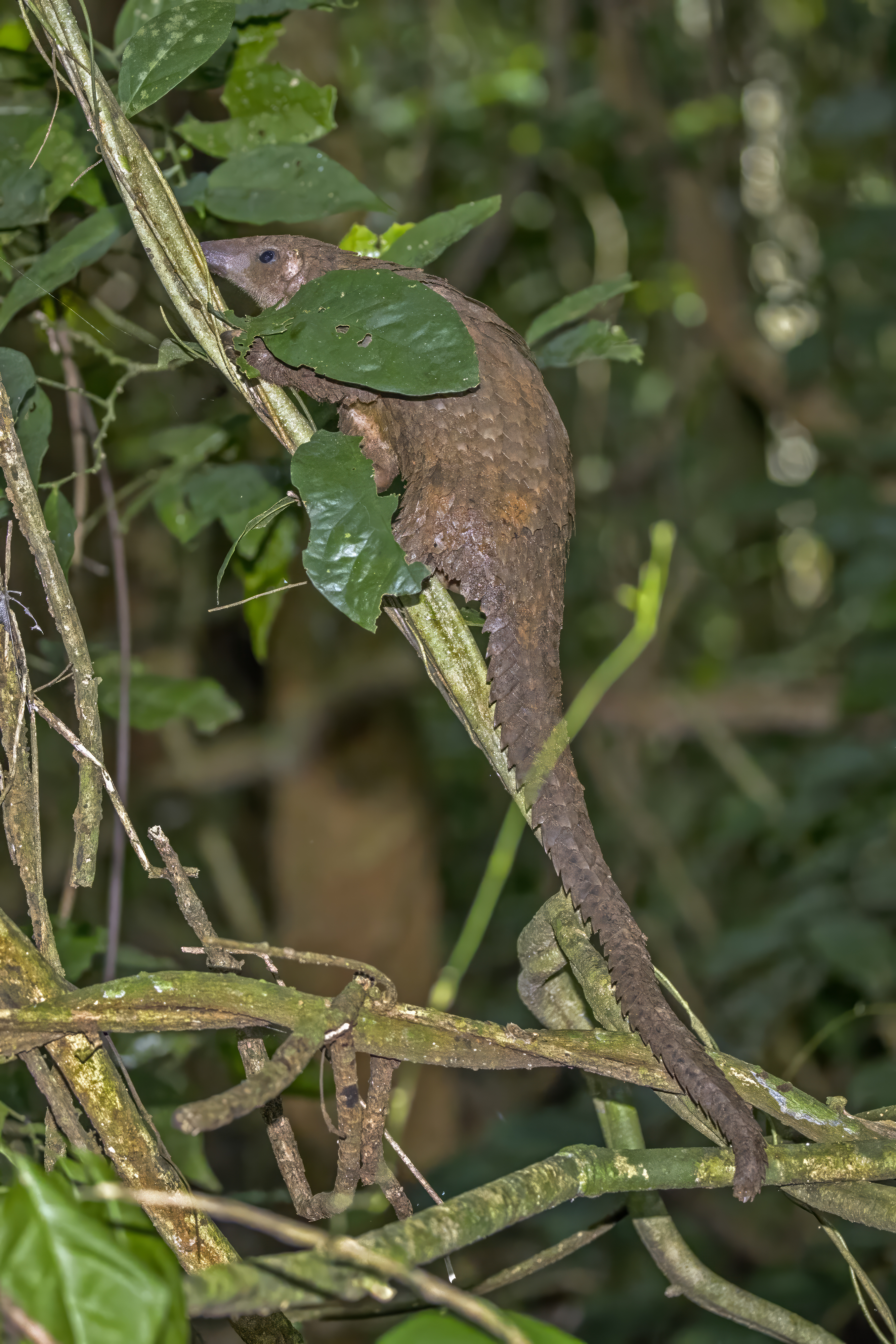
Cameroon occupies a pivotal position in Central African wildlife conservation, straddling the vast Congo Basin rainforest to the south and east while sharing borders with Nigeria, Chad, the Central African Republic, Gabon, and the Republic of Congo. This geographic location makes it both a critical refuge for biological diversity and a major transit corridor for the illegal wildlife trade. For pangolins, Cameroon represents one of the most significant and most troubled conservation landscapes in Africa, where formidable populations of three species coexist with a trafficking industry that has intensified dramatically since the mid-2000s.
Pangolin Species in Cameroon
Cameroon is home to three of Africa's four pangolin species, each occupying a distinct ecological niche within the country's varied habitats.
The White-Bellied Pangolin (Phataginus tricuspis)
The most abundant pangolin species across Central Africa, the white-bellied pangolin is a medium-sized, semi-arboreal animal typically weighing between one and three kilograms. In Cameroon, it is distributed broadly across the southern and western forested zones, including the Cameroon Highlands, the lowland rainforests of the Littoral and South regions, and the forest-savanna mosaic zones of the Adamawa Plateau. Its broad distribution and relatively high density compared to other species make it the most commonly encountered pangolin in Cameroon's bushmeat markets, but these same traits mask a severe and ongoing population decline driven by unsustainable hunting pressure.
White-bellied pangolins are frequently encountered in the live animal and smoked bushmeat trade throughout Cameroon's urban markets, including those in Yaoundé and Douala. Their relatively small size means that large numbers of individuals must be harvested to generate significant commercial volumes, creating a persistent and high-frequency drain on local populations that field surveys have consistently documented as unsustainable.
The Giant Ground Pangolin (Smutsia gigantea)
Africa's largest pangolin, the giant ground pangolin can reach weights of 33 kilograms and lengths exceeding one metre. It is a strictly terrestrial species, excavating deep burrows in forest and forest-savanna habitats and feeding almost exclusively on termites and ants. In Cameroon, it occurs across a broad geographic range including Dja Faunal Reserve, Lobeke National Park, Campo Ma'an National Park, and the Mbam-Djerem National Park corridor.
The giant ground pangolin faces intense pressure from both the local bushmeat trade and the international scale trafficking industry. A single adult animal carries a scale mass that can represent more than a kilogram of dried product at market weight, making each individual economically significant in the commercial trade. Classified as Endangered on the IUCN Red List, it is considered one of the most severely impacted African pangolin species at the continental level, with population trends universally assessed as declining.
The Black-Bellied Pangolin (Phataginus tetradactyla)
The most arboreal of the African pangolin species, the black-bellied pangolin is closely associated with riverine forests, flooded forest margins, and gallery forest habitats. In Cameroon, it is distributed across the Congo Basin lowland forests and the forest zones of the South and East regions. Less commonly encountered in bushmeat markets than the white-bellied pangolin due to its arboreal habits and lower detectability, it nonetheless faces significant pressure from forest loss that removes the canopy habitats essential to its survival.
Threats: Bushmeat Trade and International Trafficking
Cameroon's pangolins face a dual threat structure that has proven particularly difficult to address through conventional enforcement-focused conservation approaches.
The Domestic Bushmeat Trade
Bushmeat consumption is deeply embedded in Cameroonian food culture, representing an important protein source in both rural and urban communities. Studies of bushmeat markets in Cameroon have consistently documented pangolins as a commercially traded species, with surveys in Yaoundé and Douala identifying pangolin carcasses and live animals throughout the trade chain. Research by the Bushmeat Crisis Task Force estimated that the Congo Basin as a whole loses between one and five million tonnes of bushmeat annually to unsustainable hunting, with pangolins among the most commercially valuable species per kilogram at point of sale.
The economic logic of pangolin hunting within the bushmeat trade is straightforward: pangolins command a price premium over other bushmeat species because of their relative scarcity and the cultural preference for their distinctive flavour. In rural forest communities surrounding protected areas, pangolin hunting provides income to families who have few alternative cash sources, creating a conflict between household economic survival and species conservation that cannot be resolved through law enforcement alone.
The International Scale Trade
Overlaid on the traditional bushmeat trade is a commercially organised international trafficking industry that has transformed the economic calculus of pangolin hunting in Cameroon. Since approximately 2008, criminal networks operating across Central Africa have established procurement chains that incentivise hunters to target pangolins specifically for their scales, with payments per kilogram that far exceed what the domestic bushmeat market offers.
Dried pangolin scales from Cameroon are consolidated at intermediate collection points before being transported to Douala, Cameroon's largest city and its primary commercial port. From Douala, scales are concealed within legitimate cargo consignments — most commonly timber, agricultural products, or general freight — and shipped to ports in Asia, primarily in China, Vietnam, and Malaysia. The per-kilogram value of scales at destination markets has been documented at between USD 1,000 and USD 3,500 depending on market conditions and quality, generating profit margins that make the trade highly attractive to criminal networks despite the legal risks.
Major seizures connected to Cameroon include a 2019 interception of over three tonnes of pangolin scales at a port in Asia, traced through container shipping records to a Douala export point, and multiple seizures in 2021 and 2022 involving shipments transiting through Central African ports with Cameroonian provenance documentation. These seizures represent the visible fraction of a much larger trade flow; enforcement agencies and conservation analysts consistently estimate that intercepted shipments represent between two and ten percent of the actual trade volume.
Cameroon's Legal Framework
The primary legislation governing wildlife in Cameroon is the Law No. 94-01 of 20 January 1994 on Forestry, Wildlife and Fisheries and its associated implementing decree. Under this legislation, Class A fully protected species cannot be hunted, captured, or traded under any circumstances. All three pangolin species are classified in this category, meaning that any taking, possession, or commercial transaction involving pangolins constitutes a criminal offence.
Penalties under Law 94-01 include fines of between CFA 100,000 and CFA 10,000,000 (approximately USD 170 to USD 17,000) and imprisonment terms of between one and three years for wildlife crime offences. In practice, prosecutions have been inconsistent, convictions are rare, and sentences at the lower end of the prescribed range have been the norm when convictions are secured. Critics of the law have argued that penalty levels are insufficient to deter organised criminal networks operating in a trade generating tens of millions of dollars annually.
At the international level, Cameroon has been a signatory to CITES since 1981. Since 2016, all eight pangolin species have been listed on Appendix I of CITES, prohibiting commercial international trade. Cameroon has submitted regular CITES reports and has participated in capacity building programmes organised through the CITES secretariat and UNODC, though enforcement capacity at ports and border crossings remains a significant weakness.
Conservation Organisations and Field Programmes
A growing network of conservation organisations operates in Cameroon with programmes that directly or indirectly benefit pangolin populations.
LAGA: The Last Great Ape Organization
Founded in Cameroon in 2003, LAGA has developed an innovative model of wildlife law enforcement support that combines investigative capacity, prosecutor support, and media engagement to drive trafficking prosecutions through the Cameroonian legal system. LAGA operatives conduct undercover investigations, gather evidence, coordinate with law enforcement authorities for arrests, and support prosecutors through the trial process to secure convictions.
LAGA has recorded hundreds of prosecutions for wildlife crime in Cameroon over its operational history, including significant cases involving pangolin traffickers. Its model of embedding conservation expertise within the legal enforcement system — rather than operating purely outside it — has been replicated in several other African countries under the Wildlife Justice Commission framework and has been credited with materially raising the cost of large-scale wildlife trafficking in Cameroon compared to countries without similar institutional support.
WWF Cameroon
The World Wide Fund for Nature has operated in Cameroon since the 1960s and maintains active programmes in several of the country's most important wildlife landscapes, including the Dja Faunal Reserve, the Lobeke area, and the Cameroon Highlands. WWF's work encompasses protected area management support, anti-poaching patrol capacity building, community conservation programming, and advocacy for strengthened national wildlife governance. Pangolins feature as a species of concern across multiple programme areas, though dedicated pangolin-specific programming has been limited relative to the support provided to higher-profile species such as forest elephants and western lowland gorillas.
African Pangolin Working Group
The African Pangolin Working Group, the primary technical body coordinating pangolin conservation expertise across the continent, has worked with Cameroonian conservation partners to strengthen survey methodology, develop pangolin-specific training for law enforcement officers, and build the national data base on pangolin distribution and trafficking patterns. The organisation's expertise in providing technical guidance to CITES processes has directly supported the enhanced protections for pangolins secured at the 2016 CITES Conference of the Parties in Johannesburg.
Protected Areas and Landscape Conservation
Cameroon's protected area network encompasses approximately 19 percent of the national territory and includes some of the most important pangolin habitats in Central Africa. The Lobeke National Park in the far southeast, contiguous with Dzanga-Sangha in the Central African Republic and Nouabale-Ndoki in the Republic of Congo, forms part of the Sangha Trinational World Heritage Site — one of the largest intact forest blocks in the Congo Basin and a stronghold for giant ground pangolins. The Dja Faunal Reserve, a UNESCO Biosphere Reserve and World Heritage Site in the South Region, protects lowland rainforest habitat of exceptional biodiversity value.
However, the formal protection status of these areas does not translate directly into effective pangolin protection. Anti-poaching patrol coverage is limited relative to the areas being managed, ranger motivation and equipment are often inadequate, and corruption within enforcement structures undermines the effectiveness of law enforcement responses. Conservation analysts have consistently highlighted the gap between the legal protection framework and operational protection reality as the central challenge in Cameroonian wildlife management.
Community Conservation and Sustainable Livelihoods
An increasing recognition that enforcement-only approaches are insufficient has driven investment in community-based conservation programmes in Cameroon that seek to align the economic interests of forest communities with the conservation of wildlife populations, including pangolins. These programmes typically combine some form of sustainable livelihood support — alternative income sources, community forest management, ecotourism development — with conservation awareness activities and community ranger schemes that give local people a stake in monitoring and protecting wildlife.
Results from community conservation pilots in Cameroon have been mixed but in some cases encouraging. In landscapes where community forest concessions have been established with meaningful tenure rights and economic benefits, survey data have shown reduced bushmeat offtake for some species. However, the structural economic incentives created by the international scale trade have in some cases overwhelmed community conservation frameworks, as the cash values available from pangolin trafficking exceed what conservation programmes can credibly offer as alternatives.
The Road Ahead
Cameroon's pangolin conservation challenge is not primarily a scientific problem but a governance one. The biology of Cameroon's pangolin species is reasonably well understood; the trafficking dynamics, while complex, have been extensively documented; the legal framework, while imperfect, provides a basis for effective prosecution. What remains insufficient is the sustained political will, institutional capacity, and resource commitment needed to translate the existing legal and technical knowledge base into the kind of consistent, effective enforcement that would materially reduce trafficking volumes.
Addressing this will require interventions across multiple levels simultaneously: stronger enforcement at Douala port and other export points, improved ranger capacity and accountability in protected areas, meaningful prosecution outcomes for mid-level and senior traffickers, demand reduction engagement in destination countries, and community conservation programmes that offer realistic economic alternatives to pangolin hunting. None of these elements alone is sufficient; their combined and sustained application over years and decades represents the minimum credible response to a crisis that has been escalating for more than two decades.
Cameroon's pangolins remain, for now, a presence in the Congo Basin forests that have harboured them for millions of years. Whether that presence endures through the twenty-first century will depend on choices made by Cameroonian institutions, international conservation partners, and the global community in the years immediately ahead.