Pangolin Conservation in Kenya: Savanna, Coast, and Crisis
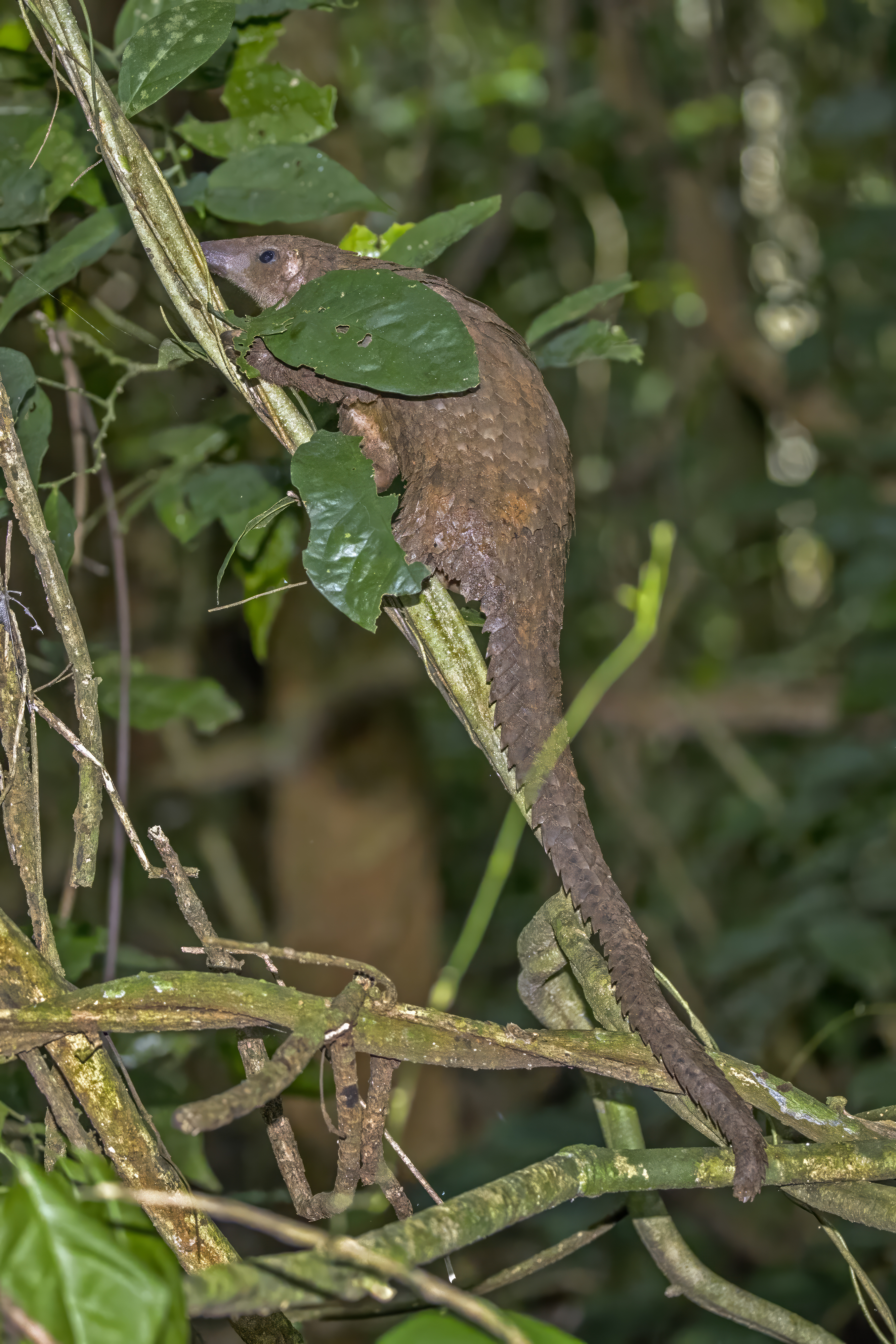
Kenya occupies a central position in African conservation — as a source of global wildlife tourism revenue, as the headquarters of UNEP and numerous international NGOs, and as a country with one of the continent's most developed wildlife enforcement systems. For pangolin conservation, however, Kenya presents a sobering picture: a country with strong institutions and considerable conservation capacity that nevertheless functions as both a source country for pangolins taken from its own landscapes and a major transhipment hub for scales aggregated from across eastern and central Africa. Understanding Kenya's dual role — and the conservation responses it demands — is essential for anyone engaged with pangolin protection in the region.
Pangolin Species in Kenya
Two pangolin species are confirmed in Kenya. Temminck's ground pangolin (Smutsia temminckii) is the more widely distributed, occurring across Kenya's vast savanna and semi-arid landscapes from the northern frontier through the Rift Valley and into the country's southern rangelands bordering Tanzania. It is a terrestrial, primarily nocturnal species that forages on subterranean ant and termite colonies, digging with heavy curved claws and detecting prey through an acute sense of smell. In the protected areas of Laikipia, Samburu, and the Maasai Mara ecosystem, Temminck's ground pangolin has been recorded by camera traps and opportunistic sightings, though systematic population surveys remain scarce. Its secretive habits and low population density make it genuinely difficult to count.
The white-bellied pangolin (Phataginus tricuspis) has a more restricted distribution in Kenya, confined to the coastal forest strip and forest patches in the country's southeast. The Arabuko-Sokoke Forest on the north Kenya coast — the largest remaining coastal forest in East Africa — represents one of the most important confirmed sites for this species in the country. It also occurs in the Shimba Hills National Reserve and in forest fragments around the Tana River delta. Arboreal and nocturnal, it is rarely seen and poorly monitored even in areas where it is known to occur.
Threats
Hunting and Local Trade
Within Kenya, pangolins are hunted opportunistically by rural communities, most often by livestock herders and smallholder farmers who encounter pangolins while tending animals or cultivating land at night. Electric fences around some private conservancies have historically caused pangolin mortality when animals are electrocuted while crossing fence lines, though improved fence design with wildlife-friendly modifications has reduced this problem in some areas. In coastal communities adjacent to Arabuko-Sokoke, white-bellied pangolins are occasionally captured for local sale — both as bushmeat and, increasingly, to middlemen connected to the international scale trade.
The transition from incidental catch to targeted hunting for export marks a dangerous shift in hunting economics. When the per-kilogram price of dried scales on the international market substantially exceeds local bushmeat values, hunters have financial incentives to specifically target pangolins rather than treating them as occasional opportunistic catch. This shift has been documented in multiple Kenyan landscapes over the past decade.
Kenya as a Trafficking Transit Hub
Kenya's most significant role in the pangolin crisis is geographic rather than ecological: Mombasa port, the busiest in eastern Africa, serves as a transhipment hub for pangolin scales originating not only in Kenya but in Uganda, Rwanda, South Sudan, DRC, and parts of Ethiopia. Container traffic from Mombasa reaches China, Vietnam, and Southeast Asian markets via established shipping routes. Seizures at Mombasa documented by TRAFFIC and the Kenya Wildlife Service have intercepted consignments ranging from tens to hundreds of kilograms of scales in single operations, and the pattern of documentation fraud — declaring pangolin products as dried fish, raw hides, or agricultural commodities — mirrors methods used at other major African ports.
The logistics corridor from Kampala and Kigali to Mombasa via the Northern Corridor highway is one of the most heavily used freight routes in eastern Africa. Investigators have traced pangolin product along this route, moving from collection points in Uganda and Rwanda into Kenya by truck, consolidated in Nairobi or Mombasa, and containerised for export. The Kenya Revenue Authority and Kenya Wildlife Service have established a joint enforcement unit with some dedicated capacity for wildlife crime at port, but resource constraints limit the depth of inspection possible against overall container volumes.
Habitat Fragmentation
Land use change — driven by agricultural expansion, pastoralist range extension, and infrastructure development — has reduced and fragmented pangolin habitat across Kenya's landscapes. In Laikipia, community ranch subdivision and conversion to smallholder agriculture has reduced the connectivity between private conservancies. Along the coast, coastal forest clearance for tourism development, charcoal production, and smallholder farming has shrunk the habitat available to white-bellied pangolins. Road construction through previously remote wildlife areas has opened corridors for hunters who previously lacked access. The cumulative effect of these habitat changes is difficult to quantify without systematic population monitoring, but the direction of impact is clear.
Legal Framework: Kenya's Wildlife Conservation and Management Act
Kenya's Wildlife Conservation and Management Act (WCMA) of 2013 is among the strongest wildlife protection laws in Africa. It classifies pangolins as protected species and establishes penalties for poaching that include mandatory minimum prison terms and substantial fines — a significant strengthening from earlier legislation that had allowed for payment-in-lieu-of-imprisonment arrangements that undermined deterrence. The Act also criminalises trafficking in wildlife products, providing a legal basis for prosecuting not just hunters but brokers, freight forwarders, and others in the supply chain.
Kenya is a CITES signatory with an established implementation and enforcement record. The Kenya Wildlife Service (KWS) coordinates wildlife law enforcement across the country, working with police, customs, and the Director of Public Prosecutions on trafficking investigations. Prosecution success rates for wildlife cases have improved since the WCMA 2013 came into force, partly because the mandatory minimum sentencing provisions reduce the risk of inadequate fines being substituted for imprisonment at judicial discretion.
Conservation Initiatives
Kenya Wildlife Service Pangolin Conservation Programme
KWS has progressively elevated pangolin conservation as a priority within its broader wildlife management mandate. Dedicated pangolin monitoring at key sites — including Ol Pejeta Conservancy, Lewa Wildlife Conservancy, and Arabuko-Sokoke Forest — has been supported through partnerships with conservation NGOs and academic institutions. Camera trap networks deployed primarily for lion and leopard monitoring across Laikipia have generated valuable pangolin sightings data as a byproduct, contributing to preliminary understanding of Temminck's ground pangolin distribution in the region.
KWS's ranger training curricula have incorporated pangolin identification and handling protocols, ensuring that rangers and scouts across the country's protected area network can recognise pangolins encountered in the field and respond appropriately. Injured or confiscated pangolins are referred to KWS-approved rehabilitation facilities for veterinary assessment and, where possible, eventual release.
Community Conservancy Model
Kenya has pioneered the community conservancy model — wildlife-friendly land use on communally owned land, managed by local communities and generating revenue from conservation tourism. The Northern Rangelands Trust (NRT), operating across a network of conservancies in northern Kenya, has embedded wildlife monitoring in conservancy operations, and Temminck's ground pangolin has been documented within several NRT conservancies. The financial model — where conservancy membership provides communities with conservation-linked income — creates incentives to protect wildlife that complement formal law enforcement.
The Laikipia Plateau, with its mix of private conservancies, community ranches, and smallholder farms, represents one of Kenya's most important pangolin landscapes outside protected areas. Private conservancy rangers conduct nocturnal patrols that occasionally record pangolin encounters, and some conservancies have implemented dedicated pangolin monitoring protocols. The legal status of wildlife on private and community land under the WCMA 2013 — which vests wildlife custody in KWS but permits community management under agreement — provides a framework for engaging non-government land managers in pangolin protection.
Coastal Forest Conservation
The white-bellied pangolin's dependence on intact coastal forest makes the conservation of Arabuko-Sokoke and the Shimba Hills critical for this species in Kenya. A Rocha Kenya has operated a long-standing community conservation programme in the Arabuko-Sokoke buffer zone, supporting beekeeping, butterfly farming, and ecotourism as alternative livelihoods for communities that previously depended on forest resource extraction. The Kenya Forest Service, National Museums of Kenya, and international partners including the Critical Ecosystem Partnership Fund (CEPF) have invested in Arabuko-Sokoke's management infrastructure. For pangolins, the preservation of this forest against encroachment is an existential priority.
TRAFFIC East Africa
TRAFFIC's East Africa office, based in Nairobi, has produced intelligence reports and market surveys documenting pangolin trade flows in Kenya and the broader region. These reports have informed KWS enforcement priorities, provided evidence for prosecutions, and contributed to regional coordination efforts through bodies including ICCWC and the African Wildlife Law Enforcement (AWLEN) network. TRAFFIC's presence in Nairobi — alongside CITES Secretariat representation and a dense concentration of international conservation NGOs — gives Kenya's pangolin conservation community better access to international expertise and funding than most eastern African countries.
Kenya's Comparative Advantage
Kenya's conservation assets are real: strong legislation, a dedicated wildlife service with enforcement capacity, a well-developed ecotourism industry that creates economic value for wildlife, and an international NGO presence that supports monitoring, research, and enforcement capacity building. These assets put Kenya in a position to do more for pangolin conservation than most of its neighbours — both domestically and through regional leadership. The challenge is translating institutional capacity into on-the-ground outcomes for a secretive, low-profile species that competes for attention with more charismatic wildlife.
For pangolins, Kenya's most important near-term priorities are: strengthening port-based enforcement at Mombasa with intelligence-led targeting; expanding camera trap monitoring networks in priority conservancy landscapes to build population baselines; deepening community ranger capacity in coastal forests; and increasing the prosecution rate for mid-level traffickers rather than only low-level hunters. Kenya has the tools. Sustained political and institutional will to apply them to pangolin conservation is what determines outcomes.