Pangolin Conservation in Laos: Range State, Transit Hub, and the Golden Triangle Crisis
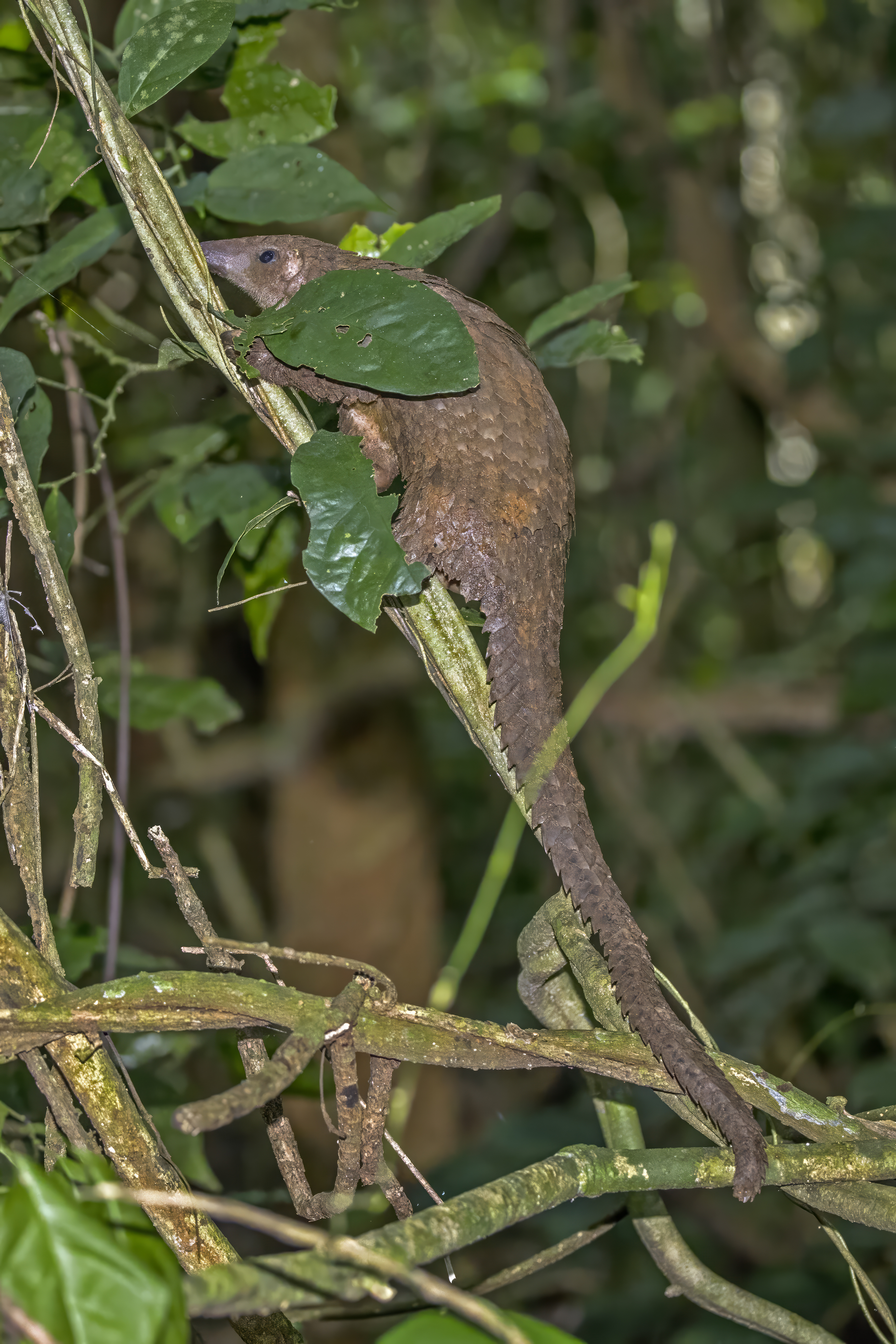
In the catalogue of countries where pangolin populations have been devastated by commercial trafficking, Laos occupies a position of particular complexity and concern. It is simultaneously a country with its own native pangolin populations, a major transit corridor for pangolins sourced elsewhere in Asia and Africa, and the host of Special Economic Zones that have become internationally notorious as unregulated markets for illegal wildlife. The Lao PDR is small in geographic terms—about 236,000 square kilometres, roughly the size of the United Kingdom—but its location at the intersection of the Mekong region's trafficking networks, its porous borders with China, Vietnam, Myanmar, Thailand, and Cambodia, and the governance challenges that have allowed certain zones to operate outside normal legal frameworks make it a critical variable in the fate of pangolins across Southeast Asia and beyond.
Laos's Native Pangolin Species
The Sunda Pangolin
Two pangolin species are native to Laos. The Sunda pangolin (Manis javanica), classified as Critically Endangered by the IUCN, occupies the lowland and mid-elevation forests across much of the country, including the Mekong River lowlands, the Annamite Range forests bordering Vietnam, and the forest complexes of the central and southern provinces. The Sunda pangolin is the more widespread of the two and has historically been the more heavily traded, both within the region and in the large-scale shipments of scales that move to China. Its fossorial and nocturnal lifestyle, insectivorous diet, and tendency to occupy a range of forest types—from primary dipterocarp forest to degraded secondary growth and forest-agriculture mosaics—once made it relatively adaptable. But decades of relentless hunting have severely depleted populations across Laos and the wider region.
Camera trap surveys in Laos's National Protected Areas have produced diminishing numbers of Sunda pangolin records over successive years of monitoring, suggesting real population declines rather than simple variation in detection probability. The species is now considered uncommon to rare across much of its former range within the country, with the highest-quality remaining habitat concentrated in the large, relatively intact forest blocks of the Nakai-Nam Theun National Protected Area, Xe Pian, and the Nam Et-Phou Louey protected area complex in the north.
The Chinese Pangolin
The Chinese pangolin (Manis pentadactyla), also Critically Endangered, occupies northern and eastern Laos within its broader range across southern China, northern Vietnam, northeastern India, and southern Nepal. In Laos, it is found primarily in the northern provinces—Phongsali, Luang Namtha, Luang Prabang, and Xieng Khouang—where its range overlaps with the mountainous border regions adjacent to China's Yunnan province. The Chinese pangolin is generally considered to prefer higher elevations and cooler forest types than the Sunda pangolin, occupying montane broadleaf and mixed forest, bamboo stands, and agricultural borders in the northern highlands.
The Chinese pangolin has been particularly devastated by the proximity of its range to the largest consumer market for pangolin products in the world. China's demand for pangolin scales in traditional Chinese medicine, and for pangolin meat as a luxury food, created a procurement frontier that swept through Chinese pangolin populations in southern China before extending into Vietnam and Laos. Survey data from Laos's northern provinces suggest that Chinese pangolin populations are now severely depleted, with field researchers describing it as genuinely rare even in formally protected areas that once supported it.
The Golden Triangle Special Economic Zones
The Kings Romans Casino and Bokeo SEZ
No discussion of wildlife trafficking in Laos can avoid the Golden Triangle Special Economic Zone in Bokeo Province, which borders Thailand, Myanmar, and China at the confluence of the Mekong and Ruak rivers. The zone is dominated by the Kings Romans Casino complex, developed by a company with substantial Chinese investment and long-standing associations with wildlife trafficking networks that have been documented by the Environmental Investigation Agency, TRAFFIC, and the United States Treasury Department, which designated the Kings Romans Group and its associated individuals under the Global Magnitsky Act for involvement in transnational criminal activity including wildlife trafficking.
Wildlife markets within and adjacent to the Golden Triangle SEZ have been documented by undercover researchers as sites where pangolins—both live animals and their scales—circulate alongside other high-value illegal wildlife products including bear bile, tiger parts, rhinoceros horn, and endangered reptiles. The zone's governance structure, which operates under a 99-year lease with substantial autonomy from Lao national law, has historically allowed these markets to function with limited interference from national enforcement agencies. International pressure, including the US Treasury designation and persistent NGO reporting, has periodically prompted the Lao government to announce enforcement actions in the area, but the durability of these actions and the degree to which the underlying trade has been disrupted remain contested among investigators.
Other SEZs and Border Trade Nodes
The Golden Triangle SEZ is the most notorious but not the only node in Laos's illegal wildlife trade geography. Border trade zones along the Vietnamese border—particularly in Phongsali and Houaphan provinces—facilitate overland movement of wildlife products between Laos and the Vietnamese markets that historically absorbed enormous volumes of pangolins. The Boten Special Economic Zone in Luang Namtha Province, adjacent to China's Yunnan border, has featured in wildlife trade surveys, and the opening of the Laos-China Railway in 2021 created new logistics infrastructure that concerns wildlife enforcement agencies: faster, more reliable connectivity between Vientiane, northern Laos, and Kunming in Yunnan province potentially benefits legitimate commerce and illegitimate wildlife trade in equal measure.
The Mekong River itself is a trafficking corridor: boats moving between Laos, Thailand, and China carry cargoes that are difficult to inspect comprehensively at the limited checkpoint infrastructure along the river's commercial navigation routes. Wildlife enforcement at Laos's river ports has been identified by TRAFFIC and the Wildlife Justice Commission as substantially weaker than at road crossings, creating a structural vulnerability that experienced trafficking operations exploit.
The Legal Framework in Laos
National Legislation
Laos adopted its Wildlife Law in 2007 and has subsequently revised it, with provisions protecting listed species from hunting, possession, and trade without authorisation. Pangolins are listed as protected species under Lao law, and the country became a signatory to CITES, meaning the Appendix I listing of all pangolin species from 2016 is formally binding. The Forestry Law and Environmental Protection Law provide complementary frameworks for protecting wildlife habitat and prosecuting habitat destruction offences.
The gap between formal legal protection and practical enforcement has been large. Laos is a one-party state where the Lao People's Revolutionary Party exercises authority over all government institutions including the judiciary, and where transparency and accountability mechanisms are substantially weaker than in multi-party systems. Wildlife crime prosecutions have occurred but have frequently resulted in lenient outcomes: fines that represent a small fraction of the commercial value of trafficked pangolins, short custodial sentences with significant scope for early release, and inconsistent application of the law across cases involving different nationalities and levels of political connection.
International Obligations and Diplomatic Pressure
Laos has faced sustained diplomatic pressure from wildlife conservation-focused donor governments, CITES, and international NGOs regarding its wildlife trade governance. The CITES Secretariat has corresponded repeatedly with the Lao CITES Management Authority about compliance issues, particularly regarding the operation of illegal markets in the Golden Triangle SEZ. The United States, European Union, and individual governments including the United Kingdom have raised wildlife trafficking concerns in bilateral discussions with Lao counterparts and in multilateral forums including the ASEAN Wildlife Enforcement Network (ASEAN-WEN).
These diplomatic pressures have produced some measurable results. The Lao government has undertaken periodic enforcement operations that have resulted in seizures and prosecutions, particularly in the period following international media attention or upcoming CITES Conference of the Parties meetings. Whether these responses represent durable institutional change or tactical compliance designed to reduce international pressure without disrupting the underlying trade networks is a judgment that different observers make differently based on their assessment of Laos's political economy and governance trajectory.
Wildlife Conservation in Laos's Protected Areas
Nakai-Nam Theun National Protected Area
The Nakai-Nam Theun National Protected Area (NPA), covering approximately 3,500 square kilometres of forested highland in central Laos along the Vietnamese border, is regarded as the most important area of wildlife habitat remaining in the country. A portion of the NPA's management is funded through revenues from the Nam Theun 2 hydroelectric project, which inundated an area of the plateau above the NPA catchment. The Nam Theun 2 Power Company has contributed funding to the Watershed Management and Protection Authority (WMPA), which oversees conservation management in the NPA, including ranger patrols, community engagement, and wildlife monitoring.
Camera trap surveys in Nakai-Nam Theun have documented the presence of both pangolin species, as well as the Annamite-endemic saola and large numbers of other threatened mammals and birds. The NPA represents one of the last landscapes in Laos where intact enough forest remains to support viable populations of wide-ranging species. Maintaining anti-poaching pressure in this area, particularly for pangolins given their value and the proximity of trafficking infrastructure, is a priority for the WMPA and for international conservation partners including WCS, WWF, and the Wildlife Conservation Society's Mekong program.
Nam Et-Phou Louey and Community Monitoring
The Nam Et-Phou Louey National Protected Area in northern Laos is notable for its pioneering use of community-based wildlife monitoring—specifically a night-time patrol programme that has engaged local village communities as monitors in exchange for revenue sharing and other benefits. The programme, developed with support from WCS, has produced one of the most rigorous long-term wildlife monitoring datasets in mainland Southeast Asia, including records of both pangolin species that allow trend analysis over time. Results have shown continuing population pressures on pangolins within the NPA despite the monitoring programme, suggesting that demand-side pressure remains intense enough to drive poaching even in areas with active community surveillance.
The community monitoring model developed at Nam Et-Phou Louey has been influential regionally and has been adapted for application in other Lao protected areas and in neighbouring countries. Its core insight—that local communities with material incentives to monitor wildlife provide more cost-effective and comprehensive coverage than centralised ranger patrols alone—has been validated by the long-term dataset the programme has generated, even as pangolin trends within the NPA remain a source of concern.
Demand Reduction and the Vietnamese Connection
Laos's wildlife trade is inseparable from Vietnamese demand. Vietnam, with a large and affluent middle class and deeply embedded cultural traditions around wildlife consumption, has historically been one of the world's largest markets for pangolins, rhinoceros horn, and other prohibited wildlife products. The land border between Laos and Vietnam extends for over 2,000 kilometres through mountainous, sparsely populated terrain, and the cross-border trade in wildlife products that flows through it has been documented repeatedly by enforcement agencies and NGOs.
Demand reduction campaigns targeted at Vietnamese consumers by organisations including Education for Nature Vietnam (ENV), TRAFFIC, and WCS have produced measurable shifts in consumer attitudes toward some wildlife products. Surveys tracking awareness of pangolin conservation status and stated willingness to purchase pangolin products show improvements in Vietnam, particularly among urban youth. Whether attitudinal changes translate into reduced actual purchasing behaviour is harder to demonstrate, and the upper-income consumer segment that drives the highest-value pangolin product consumption appears more resistant to behaviour change messaging than general population surveys suggest. Laos's proximity to this consumer base means that demand-side interventions in Vietnam have direct relevance to conservation outcomes for Lao pangolin populations.
Pathways to Progress
Progress on pangolin conservation in Laos requires action on multiple fronts simultaneously, and the complexity of the challenge is proportional to the complexity of the problem. Closing the governance loopholes that allow the Golden Triangle SEZ and other border trade zones to operate as de facto free zones for illegal wildlife trade is the single most impactful structural change available, but it requires sustained political will from the Lao government that international pressure alone has not reliably generated. Capacity building for the Department of Forest Inspection (DOFI) and the Lao Wildlife Trade Task Force, both of which bear primary enforcement responsibility, is necessary but insufficient without corresponding improvements in prosecutorial and judicial outcomes.
Protected area management in Laos's largest and most wildlife-rich NPAs must be maintained and strengthened, not allowed to erode as international conservation funding priorities shift. The Nakai-Nam Theun and Nam Et-Phou Louey monitoring programmes represent genuine conservation assets that took years to build and could be degraded rapidly if funding lapses or personnel turnover erodes institutional knowledge. Continued international investment in these programmes, directly conditioned on performance outcomes rather than process compliance, is warranted.
Finally, the Laos-China Railway and the Belt and Road infrastructure investments that are reshaping the country's connectivity present both a challenge and a potential leverage point. As Laos deepens its economic integration with China, Chinese diplomatic and commercial actors have growing influence over governance outcomes in the country. Engaging Chinese government interlocutors on wildlife trafficking through Laos—pointing out that Laos-based trafficking networks ultimately serve Chinese consumers and undermine China's own stated commitments to wildlife trade enforcement—is a diplomatic avenue that has been underutilised and deserves more systematic investment from both conservation advocates and the international community.