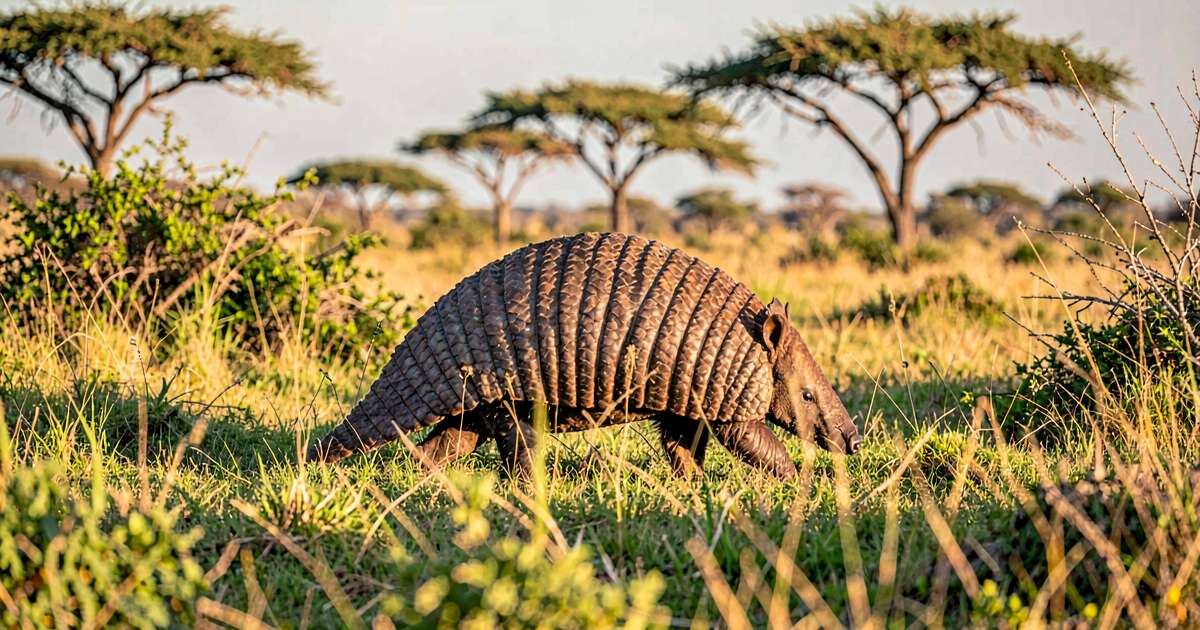
Singapore presents one of conservation biology's most striking paradoxes: a 733-square-kilometre city-state that is simultaneously home to one of the world's most active communities working to protect wild pangolins and one of the world's most important nodes in the global pangolin trafficking network. In Singapore's Central Catchment Nature Reserve, GPS-tagged Sunda pangolins forage through secondary rainforest patches managed with extraordinary care by one of Asia's best-resourced urban wildlife agencies. At the same time, at the Port of Singapore 30 kilometres to the south, container vessels carrying illegally sourced pangolin scales transit through the world's second-busiest port with enough volume that Singapore has made record-breaking wildlife seizures -- and still cannot intercept the majority of what passes through.
Singapore's pangolin story cannot be told without both dimensions. The city-state's commitment to its wild pangolin population is genuine and backed by serious scientific investment. Its role in the global trafficking crisis is structural, embedded in the geographic and commercial reality of being one of the world's pre-eminent trading hubs. Both facts are simultaneously true, and understanding them together is essential to understanding Singapore's unique position in global pangolin conservation.
Singapore's Wild Pangolin Population
Singapore's Sunda pangolin (Manis javanica) population is one of the most carefully monitored small-country pangolin populations in Asia. The animals inhabit the green infrastructure that Singapore has deliberately preserved and expanded over decades of urban development: the Central Catchment Nature Reserve, which anchors the urban forest at the island's geographic centre; Bukit Timah Nature Reserve, one of the world's smallest UNESCO World Heritage Sites by area and one of the most studied; the Bukit Batok Nature Park and Dairy Farm Nature Park adjacent to Bukit Timah; and the Southern Ridges green corridor connecting Mount Faber to Labrador Nature Reserve along the southern coast.
Beyond the formal reserves, pangolins regularly occur in urban parks, residential estates with mature tree cover, and industrial areas that retain patches of secondary forest. Night-time sightings in HDB (Housing Development Board) estate gardens, golf courses, and university campuses are regularly reported to NParks and the community-run Pangolin Working Group. Singapore's pangolins have adapted to urban matrix habitats with a flexibility that would be remarkable anywhere and is extraordinary for a species that typically requires undisturbed forest.
Estimates of Singapore's pangolin population range from a few hundred to potentially over a thousand individuals, though precise census data is difficult to establish for a nocturnal, solitary species in fragmented habitat. Research conducted by the National University of Singapore and the Lee Kong Chian Natural History Museum using camera traps and GPS tracking has established that Singapore's pangolins have smaller home ranges than their counterparts in continuous forest -- an adaptation, apparently, to the higher density of food resources in managed urban green spaces, where termite and ant colonies may be more abundant and accessible than in mature primary forest.
The Pangolin Working Group: A Model for Urban Pangolin Conservation
Singapore's Pangolin Working Group, coordinated by NParks and drawing on expertise from academic institutions, veterinary services, and a large community volunteer network, represents one of the most sophisticated urban pangolin conservation programmes in the world. Established in 2008, the Working Group coordinates monitoring, rescue response, research, and public education across the government-NGO-community spectrum that characterises Singapore's nature conservation model.
GPS Tracking and Movement Research
A long-running GPS tracking programme has fitted multiple pangolins with VHF and GPS transmitter collars or harnesses, generating detailed data on movement patterns, home range sizes, and habitat use in Singapore's fragmented urban forest. This research has produced scientific findings with implications beyond Singapore: the discovery that Sunda pangolins in urban Singapore actively use edge habitats and human-modified green spaces challenges earlier assumptions that the species is strictly dependent on primary forest, opening potential conservation strategies for other countries where primary forest is fragmented or gone.
GPS data has been used practically to identify road crossing hotspots -- locations where pangolins regularly cross roads and are therefore at high risk of vehicle strikes. NParks has used this information to install wildlife crossing infrastructure at key locations, including underpasses modified to be more navigable by small mammals, and to coordinate with Singapore's Land Transport Authority on road signage and speed management in high-risk zones.
Wildlife Rescue and Veterinary Care
NParks operates a wildlife rescue service that handles dozens of pangolin cases annually -- animals found injured by road strikes, dog attacks, or other urban hazards, or simply disorientated in urban environments. The rescue service includes trained responders who can be deployed rapidly to capture injured animals, and a network of veterinary partners who provide specialist care. Singapore's wildlife veterinary capacity, including species-specific knowledge of pangolin nutrition, stress physiology, and wound management, is among the best-developed in Asia.
Rescued pangolins that recover fully are radio-tagged and released at appropriate forest locations, with continued monitoring to assess post-release survival and reintegration. Pangolins that cannot be released due to permanent injury are maintained in zoo facilities for education and research purposes. Singapore's captive pangolin management expertise has been shared with conservation partners in range states, contributing to the broader body of knowledge on pangolin husbandry that is essential for rehabilitation programmes elsewhere.
Community Science and Public Engagement
Singapore has developed an unusually large and active community of pangolin observers and advocates. The Pangolin Working Group's public reporting channels receive hundreds of pangolin sighting reports annually, generating a citizen science dataset that complements formal camera trap monitoring. The NParks reporting app and dedicated pangolin hotline have made it easy for the public to contribute sightings and report injured animals promptly.
Public education about pangolins -- including the global trafficking crisis -- has been integrated into school curricula and nature education programmes. Singapore's Wildlife Reserves Singapore (including Singapore Zoo and Night Safari) maintains pangolins in its care and runs pangolin education programmes for the hundreds of thousands of visitors who pass through annually, including a significant proportion of Chinese tourists who represent a key target audience for demand reduction messaging.
Singapore as a Trafficking Transit Hub
Singapore's Port Authority, Changi Airport, and customs service handle one of the world's largest volumes of international trade. The Port of Singapore is the second-busiest transshipment port globally by container throughput, handling approximately 37 million twenty-foot equivalent units (TEUs) annually. This volume is Singapore's economic lifeblood -- transshipment trade is central to the city-state's economic model -- but it also creates a structural challenge for wildlife crime enforcement.
Pangolin traffickers have systematically exploited Singapore's trade infrastructure for decades. The standard methodology involves concealing pangolin scales within shipments of legitimate goods -- typically dried seafood, frozen fish, or industrial materials -- and routing through Singapore as a transshipment point between Southeast Asian source countries (Indonesia, Malaysia) or African source countries and final destination markets in China and Vietnam. The sheer volume of containers transiting Singapore -- over 100,000 per day -- makes comprehensive inspection physically impossible, and traffickers calibrate their methods to stay below risk thresholds that would trigger enhanced scrutiny.
Record Seizures and Enforcement Milestones
Singapore's Singapore Customs and the Singapore Food Agency have made some of the world's largest single pangolin product seizures in recent years, reflecting both improved enforcement capability and the enormous volume of trafficking that routes through the port. A landmark 2019 seizure intercepted approximately 12.7 tonnes of pangolin scales -- estimated to represent over 25,000 pangolins -- in a single shipment concealed within frozen meat, making it one of the largest pangolin seizures ever recorded globally. The scales were found in a container transiting from Nigeria to Vietnam, precisely the Africa-to-Asia route that has become the dominant trafficking flow in the global pangolin trade.
The 2019 seizure followed a prior interception in the same year of approximately 8.8 tonnes of pangolin scales in a different Singapore-transiting shipment, meaning that 2019 alone saw over 21 tonnes of scales seized in Singapore -- representing an estimated 42,000 or more individual pangolins. These seizures attracted significant international attention and demonstrated that Singapore had developed meaningful enforcement capability at its port infrastructure. They also demonstrated, equally clearly, that the volume of trafficking through Singapore was enormous enough to produce record seizures while leaving the majority of the trade undetected.
Singapore's Legal Framework and Enforcement Response
Singapore is a CITES signatory and has one of Southeast Asia's stronger domestic legal frameworks for wildlife trade control. The Endangered Species (Import and Export) Act prohibits trade in CITES-listed species without permits. Sunda pangolins are listed on CITES Appendix I, meaning commercial trade is prohibited for all signatory states. The Wildlife Act provides additional domestic protection for Singapore's wild pangolin population.
Penalties for wildlife trafficking under Singaporean law can reach SGD 500,000 (approximately USD 375,000) and up to two years imprisonment per offence. Singapore has prosecuted wildlife trafficking cases successfully, though convictions at the scale of the 2019 seizure-linked trafficking networks have been limited by the challenge of proving criminal knowledge in transshipment cases where cargo is sealed and operators claim ignorance of contents.
Singapore Customs has invested in X-ray scanning equipment and species identification training for customs officers. Intelligence sharing with CITES authorities, Interpol, and regional partners through the ASEAN Wildlife Enforcement Network (ASEAN-WEN) has improved the information flow that enables targeted container selection. The Integrated Risk Assessment system used by Singapore Customs incorporates wildlife trafficking risk profiles, flagging containers for inspection based on origin, routing, shipper, and commodity declared.
The Challenge of Scale
Despite these investments, the fundamental arithmetic of Singapore's trafficking challenge remains daunting. Even if Singapore's port inspection system achieves a 5% interception rate for pangolin shipments -- a figure that would represent a genuinely impressive enforcement achievement -- the remaining 95% passes through undetected. The record seizures of 2019, large as they were in absolute terms, were almost certainly a small fraction of the pangolin products that transited Singapore that year.
Addressing this structural gap requires interventions upstream and downstream of Singapore: enhanced enforcement at source countries in Africa and Southeast Asia, improved intelligence on trafficking networks and shipping companies, international prosecution of the organised criminal groups that coordinate the trade, and demand reduction in destination markets. Singapore can be a partner in all of these efforts, but it cannot solve the trafficking crisis through port enforcement alone.
The Urban-Trafficking Paradox: What It Means
Singapore's simultaneous status as a world leader in urban pangolin conservation and a major trafficking transit hub is not a contradiction to be resolved but a tension to be managed. The same geographic position that makes Singapore an attractive transshipment node makes it an influential voice in regional and global wildlife crime governance. Singapore's strong rule of law, international diplomatic relationships, and credibility as a responsible trading nation give it unique leverage to advance systemic changes in the global wildlife trade framework.
Singapore has used this leverage: it has been an active participant in CITES conferences, supported the strengthening of CITES Appendix I protections for all pangolin species (achieved at CoP17 in 2016), and contributed to international law enforcement operations targeting pangolin trafficking networks. Continued engagement in these multilateral forums -- combined with sustained investment in enforcement capacity at Singapore's own ports -- positions the city-state as a net contributor to the global conservation effort rather than merely an inadvertent enabler of the trade that threatens the species it is simultaneously protecting in its own forests.
The Sunda pangolins foraging in Singapore's Central Catchment Nature Reserve tonight are among the most closely watched and carefully protected pangolins in the world. They move through a city that knows their routes, tracks their movements, and rushes veterinary care to them when they are injured. The scales of their relatives from Indonesia and Malaysia, and pangolins from a dozen African countries, transit through that same city in sealed containers. Both facts define Singapore's pangolin story -- and the city-state's responsibility to address both with equal seriousness.