Pangolin Conservation in Thailand: Range State and Trafficking Crossroads
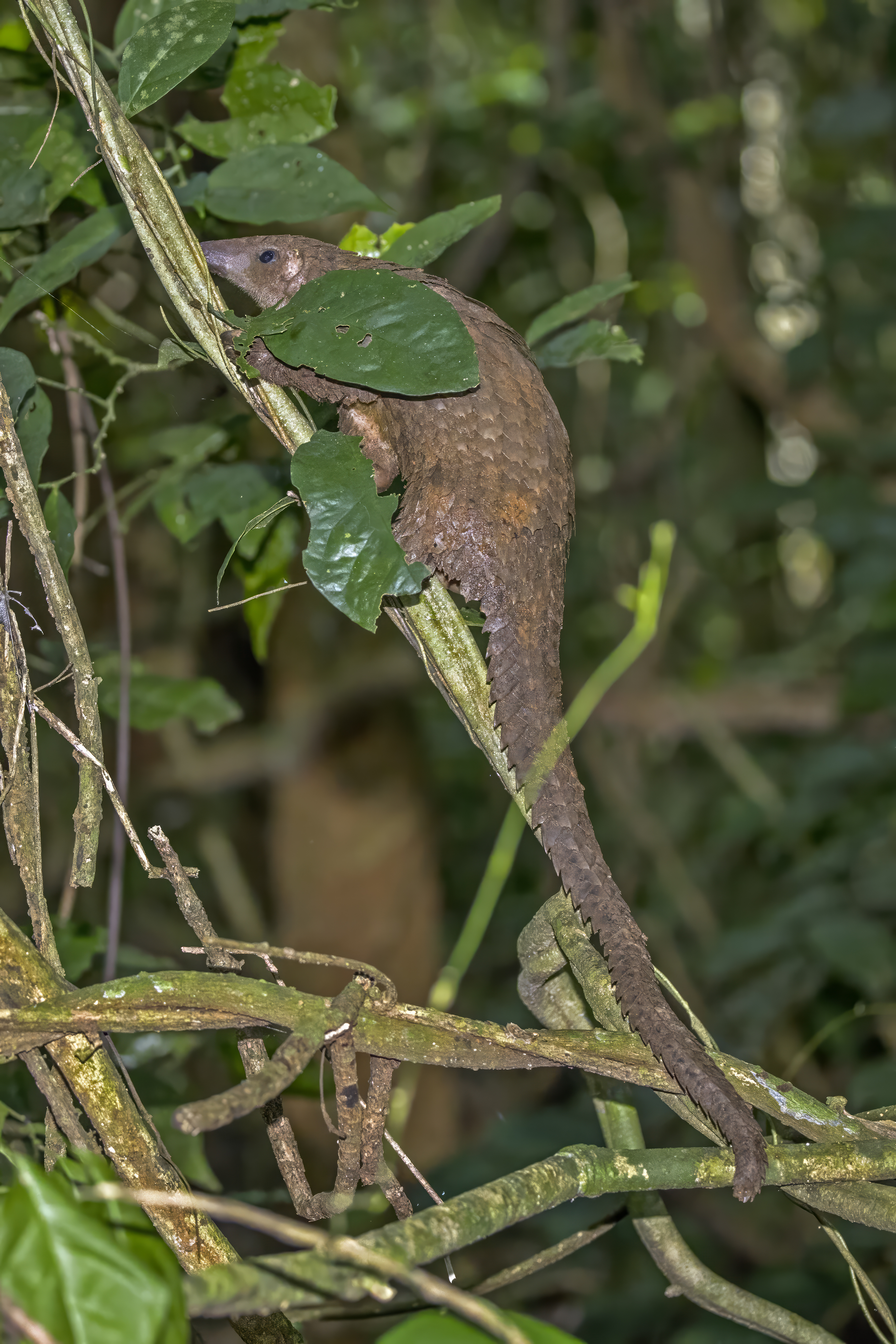
Thailand occupies a troubling and contradictory position in the global pangolin crisis. On one side of the ledger, the country is a legitimate range state for the Sunda pangolin (Manis javanica), a species that has quietly inhabited its lowland forests and montane woodlands for millennia. On the other, Thailand's geography, infrastructure, and trade networks have made it one of the most significant transit points on earth for illegally trafficked pangolins and pangolin products moving between source countries in Africa and Southeast Asia and consumer markets concentrated in China and Vietnam. Understanding Thailand's role requires holding both realities simultaneously: it is a country where pangolins genuinely belong and where they are relentlessly exploited—and a country where the response to that exploitation is, slowly and unevenly, beginning to strengthen.
Thailand's Native Pangolin: The Sunda Pangolin
Habitat and Distribution
The Sunda pangolin (Manis javanica) is the species native to mainland Southeast Asia and the Indonesian archipelago, and Thailand represents one of its northern continental range limits. Within Thailand, Sunda pangolins occupy a broad but increasingly fragmented range of habitat types: lowland tropical forests, mixed deciduous woodlands, bamboo thickets, and the lower slopes of montane forest up to approximately 1,700 metres above sea level. They are documented across much of the country—from the forests of the Western Forest Complex near the Myanmar border, through the Tenasserim Hills, into the forest patches of the northeast and the peninsular south toward Malaysia.
As solitary, nocturnal, and cryptic animals, Sunda pangolins are exceptionally difficult to survey accurately. They depend on a diet of ants and termites, locating prey colonies with a highly developed sense of smell before excavating them with powerful forelimbs. Their reliance on intact forest with sufficient insect prey makes them sensitive indicators of habitat quality. Camera trap studies in Thailand have confirmed their presence in both well-protected core zones and degraded secondary forest on the margins of human settlement, though population densities in the latter are considerably lower.
Population Decline and IUCN Status
The IUCN Red List classifies the Sunda pangolin as Critically Endangered—the highest threat category before extinction in the wild—a status it has held since the 2014 assessment. The primary driver of decline across its entire range is unsustainable exploitation for trade, compounded by habitat loss. In Thailand specifically, pangolin populations have contracted sharply over recent decades. Surveys comparing historical records with contemporary camera trap and interview-based data suggest significant local extirpations across areas of the Central Plains and much of the east, where forest cover has declined most dramatically.
The species' biology compounds the problem. Sunda pangolins reproduce slowly, typically producing a single pup per year after a gestation of roughly 130 days. Females invest heavily in each offspring, carrying pups on their tails for several months. This low reproductive rate means that even modest offtake rates can outpace population recovery, and populations depleted by poaching take years—or decades—to stabilise.
Bangkok: A Trafficking Transit Hub
Suvarnabhumi Airport Seizures
Bangkok's Suvarnabhumi International Airport has repeatedly featured in global analyses of wildlife trafficking chokepoints. Its role as one of Asia's busiest aviation hubs, connecting African source countries with Chinese and Vietnamese consumer markets via frequent direct and one-stop services, creates structural opportunities for traffickers. Shipments intercepted at Suvarnabhumi over the years have included pangolin scales packed inside frozen fish, live pangolins concealed inside modified luggage, and pangolin products disguised as dried foodstuffs. Thai Customs and the Department of National Parks, Wildlife and Plant Conservation (DNP) have periodically conducted joint inspections at the airport's air cargo terminal, where the volume of goods moving through vastly exceeds the inspection capacity of available officers.
Notable seizures have included multi-tonne consignments of pangolin scales originating in Nigeria, Cameroon, and the Democratic Republic of Congo, transiting through Bangkok en route to destinations in southern China. These cases underscore that the pangolin crisis is not a regional phenomenon but a global supply chain—and Thailand sits near the middle of it.
The Golden Triangle Connection
The Golden Triangle—the mountainous border region where Thailand, Myanmar, and Laos converge—has long been associated with illicit trade, and pangolins are no exception to this pattern. The area offers porous land borders, limited law enforcement presence, established smuggling networks originally built around narcotics, and proximity to the Mekong River corridor that connects to Chinese Yunnan province. Wildlife trafficking operations in the region frequently involve the same logistics networks as other contraband, with pangolins and their products moving by truck, boat, and motorcycle along routes that shift in response to enforcement pressure.
Special Economic Zones on the Lao and Myanmar sides of the Golden Triangle, some of which operate with limited regulatory oversight from their respective national governments, have been identified in multiple TRAFFIC and Environmental Investigation Agency reports as nodes where pangolin products—alongside ivory, tiger bones, and rhino horn—circulate through unregulated markets and are processed for onward distribution.
Maritime Routes Through Thai Ports
Laem Chabang and Bangkok's Klong Toey port handle enormous volumes of containerised cargo, and law enforcement agencies acknowledge that scanning and inspection of containers remains partial at best. Maritime routes have been used to move large-volume pangolin scale shipments from African ports via transhipment through Gulf of Thailand ports before continuing to Chinese and Vietnamese destinations. The concealment methods documented in court cases have included false-bottomed containers, shipments mislabelled as industrial materials, and consignments embedded within legitimate agricultural products. Thailand's Royal Thai Customs has made periodic large seizures at port facilities, but investigators and NGOs alike note that the scale of interceptions almost certainly represents a small fraction of total throughput.
Domestic Demand: Traditional Medicine Markets
Thailand's own domestic demand for pangolin products, while secondary in global terms to that of China and Vietnam, is nonetheless real and contributes to local poaching pressure on wild populations. Pangolin scales—composed of keratin, the same protein found in human fingernails—have been used in Chinese-derived traditional medicine systems for centuries, ascribed with properties including promoting lactation, reducing swelling, and improving blood circulation. These beliefs persist in Thai-Chinese communities, particularly in Bangkok's Chinatown district of Yaowarat and in provincial towns with significant Sino-Thai populations.
Dried pangolin scales have been documented in traditional medicine shops in Bangkok and in border towns along the Myanmar and Cambodian frontiers. The trade in live pangolins for consumption as bushmeat—considered a luxury dish in some contexts—is less well documented within Thailand than in neighbouring Vietnam, but evidence from market surveys and court cases confirms that it exists. The overlap between traditional medicine demand in Thailand and the much larger demand from Chinese nationals visiting or residing in Thailand further complicates efforts to assess and address domestic consumption patterns.
Legal Framework: Thailand's Wildlife Laws
WARPA and International Commitments
Thailand's primary domestic instrument for wildlife protection is the Wild Animal Reservation and Protection Act, commonly referred to as WARPA. First enacted in 1960 and substantially revised in 1992, WARPA designates protected species lists and sets out prohibitions on hunting, possession, trade, and export of listed species without authorisation. The Sunda pangolin is listed as a protected species under WARPA, meaning that hunting, possession, and commercial trade are prohibited under Thai law. Penalties for violations include fines and imprisonment, with more serious commercial trafficking offences attracting heavier sentences.
Thailand is also a signatory to the Convention on International Trade in Endangered Species of Wild Fauna and Flora (CITES), under which all eight pangolin species were moved to Appendix I—the highest protection level, banning all commercial international trade—at the 2016 Conference of the Parties. This upgrade strengthened the legal basis for enforcement actions at ports of entry and in domestic markets. Thailand has submitted CITES National Ivory Action Plans and participates in the CITES National Legislation Project, which aims to align domestic law with international obligations.
CITES Enforcement at Points of Entry
Practical CITES enforcement at Thailand's international entry points has been uneven. Suvarnabhumi Airport hosts a dedicated wildlife inspection unit, and training programmes supported by international partners including the United Nations Office on Drugs and Crime (UNODC) and the World Customs Organization have improved officer capacity to identify pangolin products among other wildlife contraband. Border checkpoints in remote areas remain considerably less well resourced, and the sheer multiplicity of informal crossing points along Thailand's shared frontiers with Myanmar, Laos, Cambodia, and Malaysia creates enforcement gaps that traffickers exploit systematically.
The FREELAND Foundation and Law Enforcement Partnerships
Among the non-governmental organisations working on wildlife trafficking in Thailand, the FREELAND Foundation has played a particularly prominent and long-standing role. Founded in 2000 and headquartered in Bangkok, FREELAND works at the interface of law enforcement capacity building, intelligence gathering, and policy advocacy. The organisation operates TRAFFIC's Southeast Asian secretariat functions in partnership with WWF and works closely with the DNP, Royal Thai Police, and Thai Customs to investigate and prosecute wildlife trafficking cases.
FREELAND's operational model emphasises embedding trained personnel within enforcement agencies rather than duplicating their functions from outside. This approach has contributed to a number of significant pangolin-related seizures and prosecutions within Thailand, and has helped build institutional knowledge about trafficking networks within agencies that have historically focused more heavily on plant conservation and fisheries. The organisation also coordinates with the ASEAN Wildlife Enforcement Network (ASEAN-WEN) and Interpol's Project Predator programme, connecting Thai enforcement actions with regional and global intelligence systems.
The DNP itself has expanded its wildlife crime unit in recent years, and prosecutorial outcomes in wildlife trafficking cases have gradually improved, with courts handing down custodial sentences in a higher proportion of commercial trafficking cases than was the norm a decade ago. Nonetheless, NGOs including TRAFFIC and the Environmental Investigation Agency have consistently noted that the sentences available under existing law, and those actually imposed by courts, remain low relative to the commercial value of large pangolin shipments—reducing the deterrent effect for well-capitalised trafficking networks.
Conservation in Thailand's Protected Areas
Khao Yai and Kaeng Krachan
Khao Yai National Park, Thailand's oldest and one of its most celebrated, forms the western anchor of the Dong Phayayen-Khao Yai Forest Complex, a UNESCO World Heritage Site spanning more than 600,000 hectares across central Thailand. Camera trap surveys within Khao Yai have confirmed the presence of Sunda pangolins, and the park's relatively intact lowland forest, combined with active ranger patrols, provides better baseline conditions for pangolin survival than most landscapes outside protected area networks. Kaeng Krachan National Park in Phetchaburi province—itself part of a transboundary forest complex with Myanmar—similarly harbours pangolin populations and has been the site of anti-poaching operations targeting both pangolins and other wildlife.
The Western Forest Complex, of which Kaeng Krachan forms a part, is considered the most important forest landscape in mainland Southeast Asia for large mammal conservation and likely supports the most significant remaining Sunda pangolin populations within Thailand. Ranger capacity in this complex has been strengthened through a combination of government investment and support from organisations including WWF-Thailand and Panthera.
Doi Inthanon and Northern Thailand
Doi Inthanon National Park, home to Thailand's highest peak in Chiang Mai province, sits within a landscape of montane forest that connects southward toward the Western Forest Complex and northward toward the forests of Myanmar's Shan State. Pangolin presence in the park's lower-elevation zones has been documented through both camera traps and ranger observations. Northern Thailand's proximity to the Golden Triangle creates particular poaching pressure in forest areas near the Myanmar border, and the DNP has prioritised intelligence-led anti-poaching operations in Chiang Rai and Chiang Mai provinces in response to documented trafficking activity.
Community forestry networks in northern Thailand, operating under agreements with the Royal Forest Department, represent an underutilised avenue for pangolin monitoring and informal protection. Some ethnic minority communities in upland areas maintain traditional knowledge of pangolin ecology and, where incentives and trust relationships have been developed with conservation organisations, have contributed meaningfully to early-warning systems for poaching activity.
Demand Reduction Campaigns
Recognising that enforcement alone cannot resolve a demand-driven crisis, a number of organisations have invested in behaviour change communications targeting Thai consumers and the broader Thai-Chinese community. WWF-Thailand has run campaigns emphasising the Sunda pangolin's protected status and the ecological services it provides—principally insect pest control in agricultural landscapes—rather than relying solely on emotional appeals. TRAFFIC has produced consumer-facing materials in Thai and Chinese directed at traditional medicine users, presenting the scientific evidence base (or lack thereof) for pangolin scale efficacy alongside clear legal messaging.
The 2015 Bangkok ivory ban, which saw the Thai government commit to closing its domestic ivory market following sustained international pressure—including the threat of CITES trade sanctions—provides a useful parallel for pangolin advocates. The ivory case demonstrated that sustained diplomatic pressure combined with domestic political will can produce meaningful policy change, and that market closures, even imperfect ones, can reduce the social acceptability of consumption. Demand reduction campaigners working on pangolins in Thailand have drawn explicit lessons from the ivory experience, while acknowledging that pangolin products lack the high-visibility luxury status of ivory and present different communication challenges.
Challenges and the Way Forward
The challenges facing pangolin conservation in Thailand are formidable and structurally embedded. The country's position as a major logistics hub for global trade is not incidental to its role in wildlife trafficking—it is a direct consequence of the same infrastructure that drives economic growth. Addressing trafficking without disrupting legitimate commerce requires intelligence-led, targeted enforcement rather than blanket inspection, and building that intelligence capacity takes sustained investment and institutional commitment over years.
Sentencing and prosecutorial reforms remain a priority for conservation advocates. Current penalty levels under WARPA, even following the 2019 amendments that increased maximum sentences for commercial wildlife crime, are widely regarded as insufficient to deter large-scale trafficking operations. Mandatory minimum sentences for commercial pangolin trafficking, combined with asset confiscation provisions that target trafficking profits, would strengthen deterrence considerably.
On the conservation side, the fragmentation of Thailand's remaining forests—driven by agricultural expansion, infrastructure development, and urbanisation—continues to reduce the area of viable pangolin habitat and increase the exposure of remaining populations to poaching. Landscape-level connectivity initiatives linking the Western Forest Complex with forests in Myanmar and the southern Tenasserim chain with forests in Malaysia offer the best long-term prospects for wild Sunda pangolin populations in Thailand, but require sustained transboundary cooperation that has proved politically difficult to maintain.
Thailand's pangolin story is ultimately a story about contradictions held in tension: a country with genuine conservation assets and genuine conservation will, operating within economic and geographic structures that simultaneously enable the trade it is trying to suppress. The Sunda pangolin has not yet disappeared from Thai forests, and the institutions, networks, and public awareness campaigns now in place represent a foundation that did not exist a generation ago. Whether that foundation proves sufficient—and fast enough—to keep the species from following the trajectory of so many other Asian wildlife species into functional extinction remains, as of 2026, genuinely uncertain.