Pangolin Conservation in Uganda and the Democratic Republic of Congo
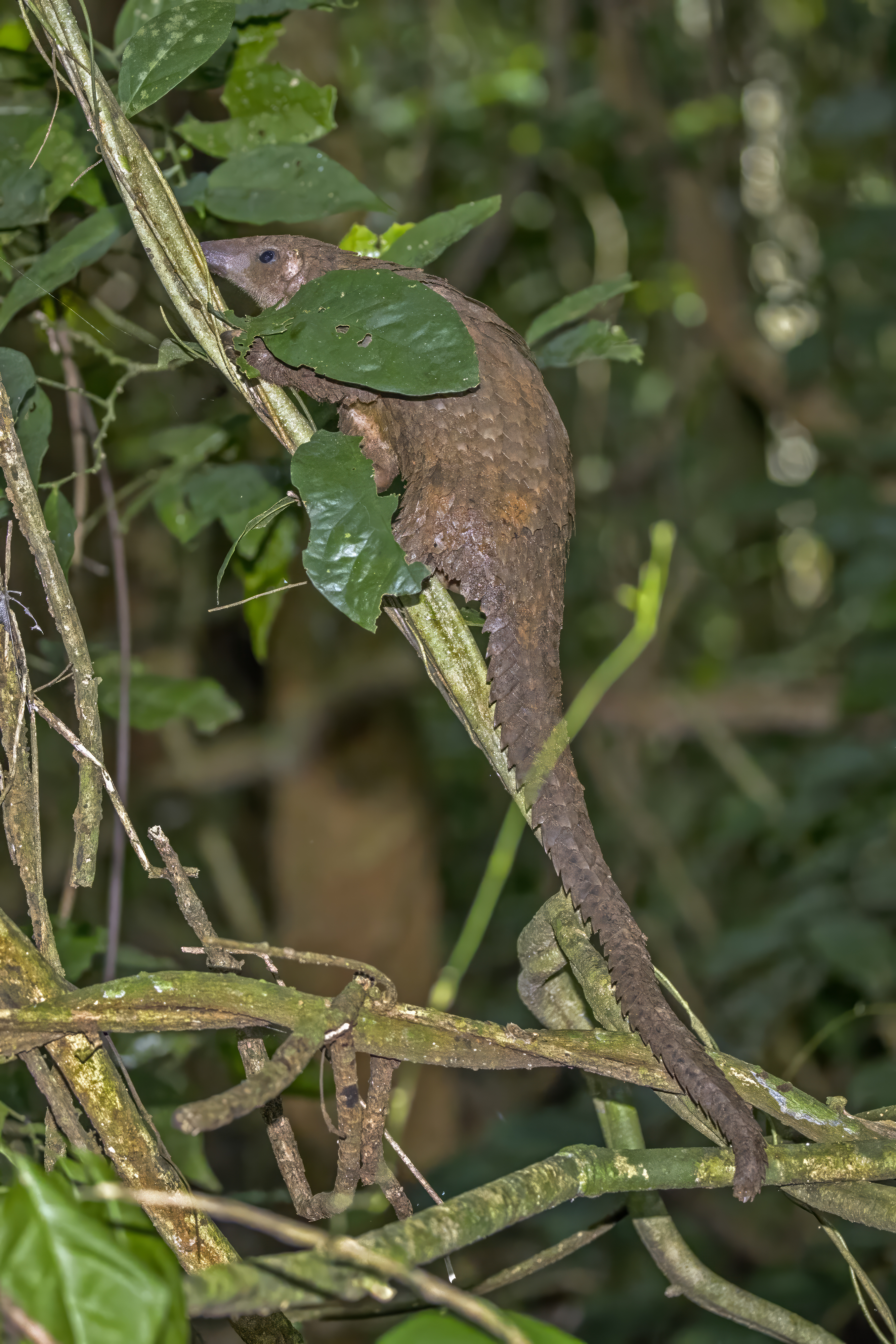
The Congo Basin covers roughly 3.7 million square kilometres of equatorial forest — the second-largest tropical rainforest on earth and one of the last places where three distinct pangolin species still move through the undergrowth in meaningful numbers. Yet that same vastness, layered over decades of armed conflict, weak governance, and surging demand from Asian markets, has made Central Africa the most dangerous region on the planet to be a pangolin. Uganda and the Democratic Republic of Congo sit at the centre of this crisis: one as a source and major transit corridor, the other as a source country of extraordinary scale whose forests are being hollowed out faster than any monitoring system can track. Understanding what is happening to pangolins in these two countries — and what is being done about it — is essential to grasping the full dimensions of the global pangolin emergency.
Pangolin Species in Uganda and the DRC
Central and East Africa are home to four pangolin species, three of which occur within the geographic scope of this article. Each occupies a distinct ecological niche, faces a distinct threat profile, and demands a distinct conservation response. Recognising the differences between them matters enormously for field teams, customs officers, and policymakers who must allocate limited resources across a vast and difficult landscape.
White-Bellied Pangolin
The white-bellied pangolin (Phataginus tricuspis) is the most frequently encountered pangolin species in both Uganda and the DRC, and it is also the most commonly seized in wildlife trafficking operations across Sub-Saharan Africa. Small enough to be concealed in a backpack, weighing between 1.5 and 3.5 kilograms, and highly arboreal in its habits, the white-bellied pangolin ranges across the Guinea-Congolian forest zone, favouring lowland and mid-altitude forest edges where insects are plentiful and hollow trees provide daytime shelter. In Uganda it appears in the forests of the western rift valley — including around Bwindi Impenetrable National Park and the Kibale Forest corridor — as well as in fragmented woodlands further north. In the DRC its range encompasses virtually the entire Congo Basin. The International Union for Conservation of Nature (IUCN) classifies it as Endangered, a status that reflects a population decline estimated at more than 50 percent over the past 15 years, driven almost entirely by hunting pressure and the international trade.
Black-Bellied Pangolin
The black-bellied pangolin (Phataginus tetradactyla) is a close relative of the white-bellied species but is notably more restricted in its distribution, occurring almost exclusively in the lowland rainforest of the Congo Basin, with the DRC holding the largest portion of its global range. Slightly smaller than its white-bellied cousin, this species is strongly associated with riverine and swamp forest habitats, spending much of its time in the forest canopy and descending to forage along waterways at night. Because it is restricted to intact lowland forest — precisely the habitat most exposed to logging concessions and agricultural expansion in the DRC — the black-bellied pangolin is considered particularly vulnerable to habitat loss in addition to hunting. It is listed as Vulnerable on the IUCN Red List, though many researchers argue that the data underpinning that assessment are insufficient and that the true population trajectory is more alarming than the current category suggests. The species does not occur in Uganda in any significant numbers, making the DRC the decisive country for its long-term survival.
Giant Ground Pangolin
The giant ground pangolin (Smutsia gigantea) is the largest pangolin species in Africa and among the most poorly understood mammals on the continent. Adults can reach 1.4 metres in length and weigh up to 35 kilograms, relying almost exclusively on army ants and termites, which they excavate from hard ground with powerful forelegs adapted for digging. Unlike the two arboreal tree pangolins, the giant ground pangolin is entirely terrestrial and requires large, undisturbed tracts of forest and savanna-forest mosaic. Its presence in the DRC has been documented through camera-trap surveys in Salonga National Park, the Lomami Basin, and areas of the eastern highlands, but population estimates remain extremely rough. It is classified as Vulnerable by the IUCN, though again, data scarcity means that assessment carries wide uncertainty. Giant ground pangolins do occasionally appear in Ugandan protected areas — there are unverified records from Queen Elizabeth National Park — but the DRC is the species' primary stronghold in this region. Its large size makes it a high-value target for traffickers, with single animals commanding prices that can exceed those of entire shipments of smaller species.
The Scale of the Trafficking Crisis
Precise trafficking data for Central Africa are inherently difficult to obtain, but the volumes revealed by seizure records, undercover investigations, and community-level surveys paint a consistent picture: the illegal pangolin trade in this part of the world operates at an industrial scale, with supply chains that connect remote forest communities to international air cargo hubs in a matter of days.
DRC: A Bushmeat and Export Hotspot
In the DRC, pangolins face a dual threat that makes the country one of the most challenging conservation environments anywhere on earth. The first threat is the bushmeat trade — a deeply embedded part of food culture and rural livelihoods across the Congo Basin. Pangolin meat is sold in markets from Kinshasa to Kisangani and across the eastern provinces, often smoked and displayed openly alongside other forest species. Surveys conducted by conservation organisations in DRC markets have recorded pangolin carcasses for sale in Bukavu, Goma, and Bunia, frequently without any attempt at concealment, reflecting both high demand and extremely low enforcement capacity. Estimates from TRAFFIC and the Wildlife Justice Commission suggest that tens of thousands of pangolins are harvested from DRC forests each year for the domestic bushmeat market alone — a volume that would be unsustainable even without the parallel export trade.
The second and more recently intensified threat is the export trade, driven by demand from East and Southeast Asia. Kinshasa's N'djili International Airport has been identified as a key departure point for pangolin shipments moving to China and Vietnam, often concealed within commercial cargo or misdeclared as agricultural produce. Seizures at Kinshasa have included frozen pangolin carcasses packed into shipping containers, dried scales hidden inside sacks of dried fish, and live animals transported in modified luggage. The eastern DRC corridor — running from Goma and Bukavu across the border into Rwanda, Uganda, and onward to Nairobi — is increasingly used to route pangolin products away from the more heavily scrutinised Kinshasa hub, fragmenting the supply chain in ways that complicate interdiction.
Uganda as a Transit Country
Uganda's role in the regional pangolin trade is primarily that of a transit country, though domestic consumption of bushmeat also contributes to hunting pressure on white-bellied pangolins within its borders. Kampala's Entebbe International Airport has appeared repeatedly in trafficking seizure records as a point of departure or layover for pangolin consignments moving from Central Africa to Asia. The country's position as a regional hub — with well-established air links to the Gulf states, South and East Asia, and a relatively efficient customs infrastructure compared to its neighbours — makes it an attractive routing point for traffickers seeking to consolidate and re-export product. Road routes entering Uganda from the DRC through the Bunagana and Ishasha border crossings, and from South Sudan further north, feed into this network. Ugandan law enforcement has made significant seizures of pangolin scales at Entebbe, with several high-profile cases in recent years involving consignments of hundreds of kilograms concealed in air cargo. Despite these successes, investigators note that the cases that reach court represent only a fraction of the total flow, and that the use of well-connected intermediaries in Kampala's expatriate and trading communities continues to insulate the highest-level operators from prosecution.
Chinese Expatriate Demand
One of the most significant demand-side drivers shaping the pangolin trade in both Uganda and the DRC is the presence of a substantial and growing Chinese expatriate worker population in each country. Since the mid-2000s, Chinese state-owned and private enterprises have invested heavily in infrastructure, mining, and telecommunications across Central and East Africa, bringing with them large workforces whose cultural familiarity with pangolin products — as a luxury food item and as a component of traditional medicine — creates localised demand that would not otherwise exist. In the DRC, Chinese workers are concentrated in the copper and cobalt mining belt of Katanga province, in major urban centres, and along infrastructure corridors being built under Belt and Road-linked agreements. In Uganda, Chinese workers are present at hydropower dam construction sites along the Nile, in the oil sector in the Albertine Rift, and in Kampala itself.
Field investigators working across both countries have documented Chinese-owned restaurants and private networks supplying pangolin meat to expatriate clients willing to pay substantial premiums. This demand has a distorting effect on local markets: it drives up the price paid to hunters in the forest, extending hunting effort deeper into protected areas and incentivising the targeting of pangolins specifically — rather than the indiscriminate bushmeat harvest that characterises subsistence hunting. It also creates direct linkages between the local supply chain and the international export trade, as individuals embedded in expatriate networks are well-positioned to consolidate product and arrange international shipment through established business relationships and cargo channels.
Legal Protections
Both Uganda and the DRC have legal frameworks that prohibit the hunting, trade, and export of pangolins, and both are party to the Convention on International Trade in Endangered Species of Wild Fauna and Flora (CITES), under which all four African pangolin species have been listed on Appendix I since 2016, prohibiting commercial international trade. The gap between law on paper and enforcement in practice is, however, substantial in both countries.
Uganda's Wildlife Act
Uganda's principal wildlife legislation is the Uganda Wildlife Act of 2019, which replaced the earlier 1996 Act and significantly strengthened penalties for wildlife offences. Under the current law, the unlawful killing, capture, or trade of a protected species — which includes all pangolin species — can attract a fine of up to 300 currency points or imprisonment of up to ten years, or both. The Act also introduced provisions for the forfeiture of assets used in wildlife crime, a measure intended to deter the commercial operators who finance large-scale trafficking operations. Enforcement of these provisions is the responsibility of the Uganda Wildlife Authority, working in coordination with the Uganda Police Force and the Directorate of Public Prosecutions. In practice, prosecutions have increased meaningfully since 2019, but conviction rates remain low, and sentences handed down by courts often fall at the lower end of the permissible range, reflecting a judiciary that has not yet fully internalised wildlife crime as a serious offence comparable to other forms of organised crime.
DRC's Conservation Framework and ICCN
The DRC's primary wildlife conservation institution is the Institut Congolais pour la Conservation de la Nature (ICCN), the state body responsible for managing the country's protected area network of approximately 32 national parks and reserves covering around 10 percent of national territory. The legal framework governing wildlife is anchored in the 1969 Law on Nature Conservation and its subsequent amendments, supplemented by the 2002 Forest Code. All pangolin species are legally protected under DRC law, and their hunting, trade, and export are prohibited. The reality on the ground, however, is that the ICCN operates with a budget and ranger force wholly inadequate to the scale of territory and threat it is asked to manage. The DRC is the size of Western Europe; its protected areas span habitats ranging from lowland rainforest to high-altitude montane zones; and many of its parks overlap with active conflict zones where armed groups extract wildlife as a source of revenue and provisioning. Rangers are frequently unpaid for months at a time, poorly equipped, and face genuine physical danger. Under these conditions, enforcement of pangolin protections is irregular and localised at best.
Conservation Efforts on the Ground
Against this difficult backdrop, a range of governmental and non-governmental actors are working to improve outcomes for pangolins in both countries, with approaches that range from law enforcement capacity-building to community engagement and demand reduction.
Uganda Wildlife Authority Programs
The Uganda Wildlife Authority (UWA) has in recent years made pangolin conservation a more explicit operational priority, partly in response to external pressure from international conservation organisations and partly because high-profile seizures at Entebbe have drawn attention to Uganda's exposure to reputational risk as a trafficking hub. UWA has worked with TRAFFIC and other partners to develop training materials for customs and wildlife enforcement officers specifically focused on pangolin identification — a skill that is far from universal among frontline staff who may encounter pangolin products in unfamiliar forms, such as dried scales, pangolin-derived traditional medicine preparations, or frozen carcasses. The authority has also established a wildlife crime intelligence unit that collaborates with Interpol's Wildlife Crime programme and the United Nations Office on Drugs and Crime (UNODC) to build cases against higher-level trafficking networks rather than focusing enforcement effort solely on low-level couriers. Community ranger programmes operating in buffer zones around Bwindi Impenetrable National Park and other protected areas have helped extend surveillance capacity beyond what UWA's own staff can cover, with local informant networks providing advance intelligence on hunting and trade activity.
Community Conservation in Eastern DRC
Eastern DRC presents some of the most challenging and innovative community conservation work being attempted anywhere in pangolin conservation. Organisations including the Zoological Society of London, the African Wildlife Foundation, and a number of smaller Congolese NGOs have developed community-based natural resource management programmes in landscapes around Virunga National Park, the Itombwe Massif, and the Maiko Forest. These programmes rest on a fundamental recognition that conservation cannot succeed in eastern DRC without addressing the acute livelihood insecurity that drives bushmeat hunting. Where programmes have been able to offer credible economic alternatives — through support for sustainable agriculture, community fish ponds, ecotourism employment, or small enterprise development — monitoring data have shown measurable reductions in hunting offtake, including of pangolins. Community wildlife guardians, drawn from local villages and trained in basic survey and reporting techniques, have become a critical source of presence data for species like the white-bellied pangolin that are nearly impossible to monitor through conventional camera-trap or transect surveys in dense forest. The security situation across much of eastern DRC remains volatile, however, and conservation staff routinely operate under conditions that make sustained programmatic work extremely difficult.
Protected Area Presence
The protected area networks of Uganda and the DRC represent the most important formal safeguard for wild pangolin populations in the region, though the degree of protection they afford varies enormously by site, management capacity, and the security environment.
Bwindi Impenetrable Forest and Queen Elizabeth National Park
Bwindi Impenetrable National Park, covering approximately 331 square kilometres in southwestern Uganda along the border with the DRC, is best known internationally as the habitat of roughly half the world's remaining mountain gorillas. Its dense montane and submontane forest also supports a population of white-bellied pangolins, though direct observations are rare given the species' nocturnal and secretive habits. Camera-trap studies have occasionally captured white-bellied pangolin images in Bwindi, and local community members report encounters with some regularity. The park's high visitation levels for gorilla trekking — and the associated revenue — support a relatively well-resourced ranger force that provides meaningful protection compared to many other Ugandan protected areas. Queen Elizabeth National Park, covering the savanna-forest mosaic of the Albertine Rift further north, supports a more fragmented pangolin presence, with white-bellied pangolins documented in the Maramagambo Forest section and unverified records of giant ground pangolins in the park's remoter areas. Both parks benefit from UWA management and from the attention of international conservation organisations with long-term programmes in the region.
Virunga National Park and the Ituri Forest
Virunga National Park in eastern DRC — Africa's oldest national park, established in 1925 — is one of the continent's most biodiverse protected areas and one of the most dangerous for both wildlife and the rangers who protect it. Spanning nearly 8,000 square kilometres from the Rwenzori Mountains in the south to the Rwindi plains in the north, Virunga supports populations of white-bellied and black-bellied pangolins in its forest sectors, with the Mikeno sector and the northern sector's lowland forest holding the most suitable habitat. The park has lost more than 200 rangers to armed attacks since the 1990s — a toll that reflects the intensity of the conflict environment in which ICCN staff operate. The Ituri Forest in northeastern DRC, partly encompassed within the Okapi Wildlife Reserve — a UNESCO World Heritage Site — represents another critical landscape for both white-bellied and black-bellied pangolins. Camera-trap work in the Ituri has documented all three species present in this article, and the relative remoteness of the forest has historically provided some natural protection. Increasing encroachment from agricultural communities and artisanal miners, however, is steadily reducing that buffer.
The Road Ahead
The trajectory for pangolins in Uganda and the DRC will be determined by a set of interconnected factors that no single organisation or government can address in isolation. Demand reduction in China and Vietnam — still the dominant end markets for pangolin scales and meat — remains the highest-leverage intervention available globally, and campaigns focused on younger urban consumers in those countries have shown some evidence of shifting attitudes, if not yet behaviour at scale. In the supply countries, the most durable gains will come from combinations of strengthened law enforcement targeting the commercial operators who finance large-scale trafficking, credible alternative livelihood provision for forest communities whose economic choices are constrained by poverty and insecurity, and sustained investment in the ICCN's institutional capacity to manage the DRC's extraordinary but chronically underfunded protected area estate.
International funding flows to pangolin conservation in Central Africa remain modest relative to the scale of the problem. The DRC in particular receives far less conservation investment per unit area of critical habitat than countries like Gabon or Cameroon, partly because the security environment discourages long-term programme commitments and partly because institutional instability makes donor accountability difficult to maintain. Closing that gap — and ensuring that a meaningful share of the funds that do flow reach community-level programmes rather than capital-city overhead — is among the most important practical contributions that the international conservation community can make. For the white-bellied pangolin in Uganda's western forests, the black-bellied pangolin clinging to the Congo Basin's river margins, and the giant ground pangolin moving quietly through the night across the DRC's diminishing wilderness, the window for effective action remains open. It will not remain so indefinitely.