Pangolin Conservation in Zambia: Miombo Woodlands and the Fight Against Trafficking
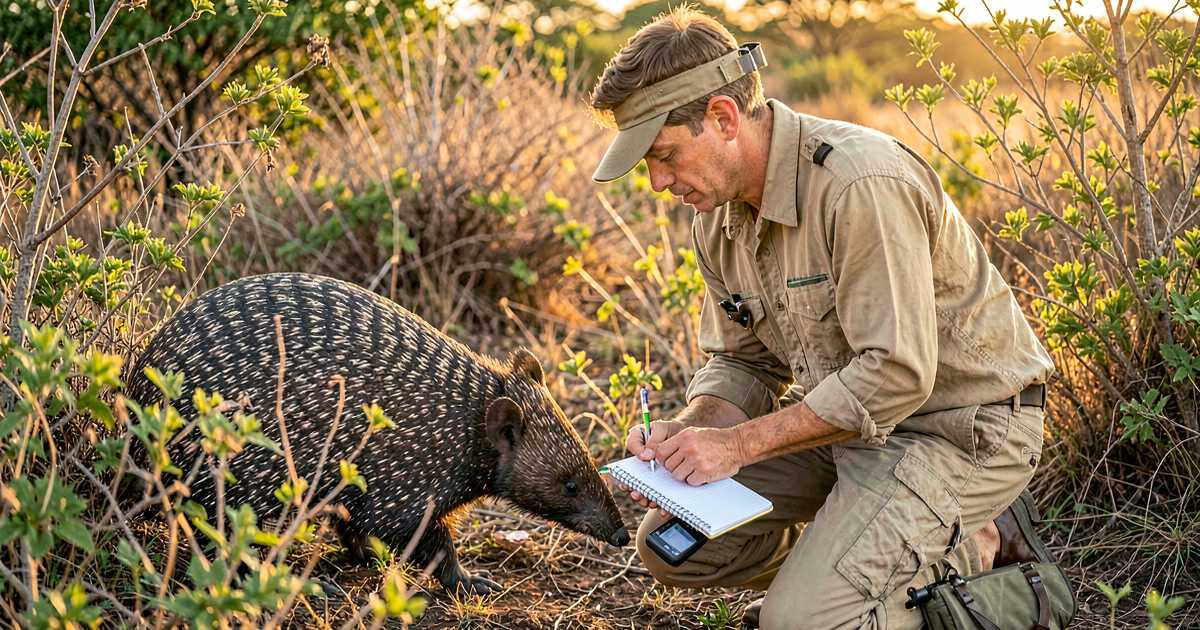
Zambia occupies a pivotal position in the geography of African pangolin conservation. Landlocked in the heart of the continent, it shares borders with eight countries—Tanzania, Malawi, Mozambique, Zimbabwe, Botswana, Namibia, Angola, and the Democratic Republic of Congo—and its vast miombo woodland savannas provide habitat for Temminck's ground pangolin (Smutsia temminckii) across a substantial portion of its territory. Zambia is also, and crucially, the country that hosts the secretariat of the Lusaka Agreement on Co-operative Enforcement Operations Directed at Illegal Trade in Wild Fauna and Flora—the principal intergovernmental wildlife law enforcement treaty in Africa. That the continent's leading anti-trafficking body is headquartered in a country with active pangolin populations is both an opportunity and a measure of the continuing challenge: Zambia has the institutional proximity to the wildlife crime enforcement architecture, yet pangolin poaching and trafficking through its territory persist.
Zambia's Pangolin Species and Habitat
Temminck's Ground Pangolin in the Miombo
The miombo woodland is one of the most extensive forest biomes in Africa, covering roughly 2.7 million square kilometres across south-central Africa, and Zambia sits near its heart. Dominated by trees in the genera Brachystegia and Julbernardia, miombo woodland is characterised by seasonally dry conditions, moderate to high canopy closure, and rich communities of termites and ants—the exact prey base that Temminck's ground pangolin depends upon. Zambia's wildlife surveys have recorded Temminck's ground pangolin across a wide geographic range within the country, including in the Luangwa Valley ecosystems, the Kafue National Park complex, the Western Province Kalahari sands, and the northern plateau woodlands bordering the DRC.
The species is broadly nocturnal and solitary, spending its days in burrows that it excavates with its powerful forelimbs or occupies opportunistically from other burrowing animals. Tracking studies in southern African countries have documented home range sizes of up to 25 square kilometres for males, suggesting that viable populations require large, intact landscape units rather than small reserves. Zambia's protected area network, which covers approximately 38 percent of the country's territory including national parks and game management areas, provides considerable potential pangolin habitat in landscape terms—though the quality of protection varies enormously between strictly managed national parks and nominally protected game management areas where human activity is common.
Population Status and Research Gaps
Zambia's pangolin population has never been formally estimated. Unlike the lions and elephants for which the country's wildlife surveys have generated at least rough abundance estimates, Temminck's ground pangolin has eluded systematic census. The species' nocturnal habits, large home ranges, and low detectability even with camera traps make standard survey methods difficult to apply at scale. The most reliable evidence of distribution comes from incidental records during broader wildlife surveys, reports from local communities and ranger patrols, and seizure data from law enforcement operations.
Camera trap studies in Zambia's major national parks—South Luangwa, Kafue, Lower Zambezi, and Liuwa Plain—have produced occasional pangolin images, confirming presence but not providing density estimates. The Zambia Wildlife Authority (ZAWA), now restructured as the Department of National Parks and Wildlife (DNPW) under the Ministry of Tourism, has acknowledged pangolins in its conservation planning documents but has not dedicated specific monitoring programmes to the species. Conservation NGOs operating in Zambia have similarly focused on the higher-profile species that drive tourism revenue—leopard, wild dog, elephant, and lion—rather than the cryptic and commercially unloved pangolin.
Threats in Zambia
Trafficking Through Zambia's Borders
Zambia's central location in southern Africa makes it a natural node in wildlife trafficking networks connecting the DRC and Tanzania to the north and east with Zimbabwe, South Africa, and Mozambique to the south. Pangolin trafficking cases documented in Zambia over the past decade have involved both local Zambian sourced animals and transit shipments from DRC, where the more forest-adapted giant pangolin (Smutsia gigantea) and the smaller tree pangolins are also targeted. The Lusaka Agreement Task Force, headquartered in Lusaka, has participated in several cross-border operations targeting pangolin trafficking networks, and Zambian courts have convicted individuals for possession and trade of pangolin specimens.
The trafficking routes through Zambia typically follow the country's major road corridors: the Great North Road connecting Lusaka to Tanzania and on to Kenya; the Great East Road connecting to Malawi and Mozambique; and the routes south to Zimbabwe via Chirundu and Livingstone. The Kazungula crossing at the confluence of the Zambia-Botswana-Zimbabwe-Namibia borders has been identified as a point where multiple wildlife products, including pangolins, have been intercepted. Chinese-owned businesses operating in Zambia's mining and construction sectors have been implicated in some wildlife trafficking cases, reflecting the broader pattern of demand from Chinese expatriate communities that has been documented across sub-Saharan Africa.
Domestic Demand and Bushmeat
Within Zambia, pangolins are subject to both subsistence bushmeat hunting and trade in traditional medicine products. Rural communities living adjacent to game management areas and national parks sometimes hunt pangolins for food, and pangolin meat is considered a delicacy in some regional cultures. More structured demand exists for pangolin scales and other body parts through informal traditional medicine networks. Zambia's diverse ethnic communities include groups from both Bantu-speaking southern African traditions and Congolese cultural influences in the Copperbelt and Northern Provinces—both of which carry traditions of using wildlife products in healing and ritual practices.
Markets in Lusaka's township areas have been documented by researchers as sites where wildlife products including pangolin scales circulate, though the scale of this domestic trade is difficult to quantify accurately given the clandestine nature of the transactions. The trade connects local poachers with intermediaries who aggregate products and sell either locally or for export. TRAFFIC has documented pangolin product trade in Zambia's markets as part of its broader surveys of the African wildlife trade, noting that the country's informal economy includes significant illegal wildlife commerce that enforcement agencies have limited capacity to address comprehensively.
Habitat Pressure from Charcoal and Agriculture
Zambia's miombo woodland, while extensive, faces progressive degradation from charcoal production, agricultural expansion, and selective timber harvesting. Charcoal is the primary cooking fuel for the majority of Zambia's urban population, including the estimated 3 million people in Lusaka, and its production requires the felling of large numbers of miombo trees. The Zambia Integrated Forest Landscape Program and other initiatives have attempted to address deforestation pressure through improved cookstove distribution and charcoal supply chain management, but demand consistently outpaces the pace of intervention.
For pangolins, habitat degradation reduces the density of the termite and ant colonies on which they depend, fragments the large home ranges required for viable populations, and pushes animals into closer contact with human communities where poaching risk increases. Game management areas adjacent to national parks, where people legally reside and use resources but wildlife is nominally protected, are particularly affected: they serve as buffers for national park pangolin populations but are also where most poaching pressure is concentrated.
The Lusaka Agreement: Zambia's Institutional Advantage
What the Lusaka Agreement Does
The Lusaka Agreement on Co-operative Enforcement Operations Directed at Illegal Trade in Wild Fauna and Flora was negotiated under UNEP auspices and came into force in 1996. Its secretariat and Task Force are permanently based in Lusaka, and the Agreement currently has nine member states: Congo, Kenya, Lesotho, Tanzania, Uganda, Zambia, Ethiopia, South Africa, and Zimbabwe, with several others in accession. The Lusaka Agreement Task Force is a unique body: a multinational wildlife law enforcement operation that can conduct cross-border investigations, facilitate intelligence sharing between national authorities, and directly support prosecution of wildlife trafficking cases across member states.
The Task Force's operations have targeted multiple trafficking networks affecting pangolins in eastern and southern Africa, working in collaboration with national police and wildlife enforcement agencies, Interpol's environmental crime programme, and bilateral cooperation frameworks with non-member states. It represents the most developed regional wildlife law enforcement architecture on the continent and gives Zambia—and the countries that work with it—institutional tools for addressing pangolin trafficking that are not available in West or Central Africa, where the equivalent institutional framework is weaker.
Prosecutions and Deterrence
Zambian courts have handled pangolin trafficking cases, with outcomes that reflect both the country's legal framework and its enforcement capacity. The Zambia Wildlife Act of 2015 criminalises the hunting, possession, and trade of protected wildlife species, with penalties including fines and imprisonment. Pangolins are listed as a specially protected species under the Act. Convictions for pangolin trafficking have resulted in custodial sentences in some cases, though NGOs monitoring wildlife crime in the region note that sentences in commercial trafficking cases sometimes fall short of the level needed to deter well-capitalised trafficking networks for whom financial penalties represent a manageable business cost.
The Lusaka Agreement Task Force's intelligence-led operations have contributed to several significant wildlife crime prosecutions in Zambia and neighbouring countries, and the organisation has published periodic reports documenting its enforcement operations. Strengthening Zambia's domestic prosecution capacity—through judicial training, prosecution support from specialist wildlife crime units, and improved evidence handling—remains an identified priority in the country's wildlife law enforcement improvement plans.
Conservation Organisations in Zambia
Zambia Carnivore Programme and Community-Based Conservation
The Zambia Carnivore Programme (ZCP) has operated in the Luangwa Valley and Kafue ecosystems for over two decades, focusing on large predators but maintaining broader ecosystem monitoring that generates incidental data on other species including pangolins. The community-based natural resource management model that has been developed in Zambia's game management areas—through the ADMADE programme and its successors—has created community wildlife police units that serve as the primary anti-poaching presence in many buffer zone areas. These community scouts, though inadequately resourced, are positioned to report pangolin sightings and poaching incidents and to build the informal informant networks that intelligence-led law enforcement requires.
The African Wildlife Foundation, Frankfurt Zoological Society, Panthera, and the Wildlife Conservation Society all operate programmes in Zambia that include anti-poaching components relevant to pangolin protection, though none has made pangolins a primary focus. The Zambia chapter of the Conservation Lower Zambezi initiative has worked to improve ranger capacity and community engagement in one of the country's most wildlife-rich landscapes, and some of this work has broader relevance to pangolin protection in the area.
Connectivity and Transboundary Conservation
Zambia is a founding participant in the Kavango-Zambezi Transfrontier Conservation Area (KAZA), the world's largest transfrontier conservation landscape, which encompasses wildlife areas across Zambia, Zimbabwe, Botswana, Namibia, and Angola. KAZA's management framework emphasises wildlife connectivity, joint anti-poaching operations, and transboundary law enforcement cooperation. Pangolins moving between the Zambian and Zimbabwean components of the Hwange-Kafue-Chobe corridor are formally protected across the full landscape under KAZA's coordinated management framework, which represents a genuine structural advantage for species conservation relative to landscapes managed purely within national boundaries.
The Liuwa Plain National Park in western Zambia, adjacent to the Angolan border and managed in partnership with African Parks, represents another connectivity node. African Parks' management model—which combines professional ranger capacity, community engagement, and conservation science—has shown effectiveness in rebuilding wildlife populations in severely degraded landscapes, and Liuwa Plain's recovery has included benefits for multiple species beyond the flagship wildebeest migration. The broader question of whether this model can be extended to more landscapes in Zambia where pangolins are under pressure is one of the key variables in the country's conservation trajectory.
Looking Ahead
Zambia has more of the institutional and ecological infrastructure for effective pangolin conservation than most African countries: a large, partially intact woodland ecosystem; a functional national wildlife law; the continent's leading regional wildlife enforcement body on its soil; and a history of community-based conservation that, however imperfect, has demonstrated the capacity to generate local buy-in for wildlife protection. What has been missing is the specific focus, monitoring infrastructure, and dedicated resources to translate these advantages into measurable outcomes for pangolins.
Priority actions include establishing baseline population surveys using camera traps and local knowledge in representative landscapes across Zambia's miombo woodland zone; strengthening domestic trafficking investigations using the intelligence-sharing mechanisms available through the Lusaka Agreement Task Force; improving judicial outcomes in pangolin cases through specialist training and stiffer sentencing guidelines; and developing community-level surveillance networks in game management areas to generate the field intelligence that anti-poaching operations depend on. Zambia is not a lost cause for pangolins. But time and political will are both finite resources, and the window for proactive action is open now.